How to Replace a Bathroom Basin Tap
24 June 2026 Joe HartleyIntermediate1–2 hours13 comments
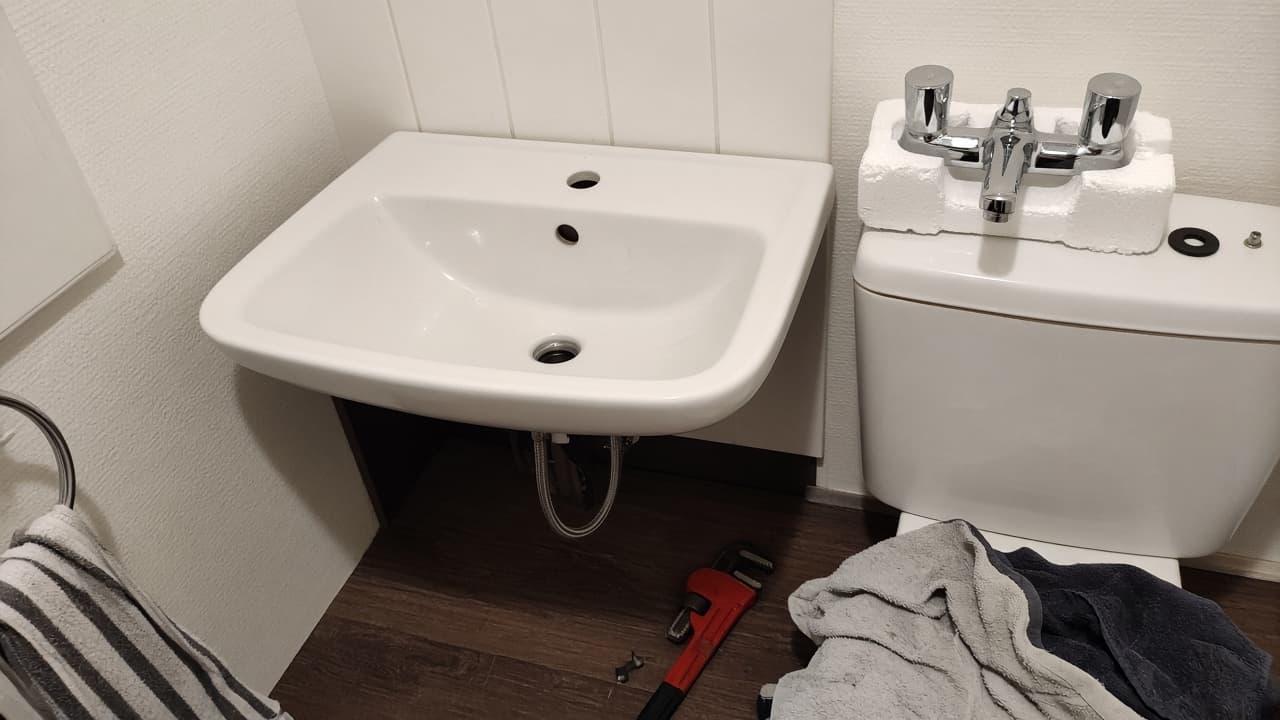
Tools
- Basin wrench
- Adjustable spanners
- PTFE tape
- Bucket and towels
- New basin taps or mixer
- Soft cloth
Bathroom basins are china, so they chip easily if you lever against them. Work slowly, support the tap body when you tighten from below, and match one-hole mixers or two-hole pillar taps to the basin you have.
Choose the right replacement
| Basin | Tap type |
|---|---|
| Two holes on the deck | Pair of pillar taps (hot and cold) |
| One central hole | Monobloc basin mixer |
| Three-hole set | Mixer with separate spout and handles (buy a matching set) |
Measure centre-to-centre spacing on two-hole basins if you are changing style. Confirm tail threads match your supply (usually ½″ BSP flexis into isolators).
Basin access before you strip anything
Shut hot and cold under the vanity (or the stopcock). Open the taps so pressure drops. Empty the cupboard and drop a towel in the basin so a backnut cannot chip the glaze on the way out. Photograph the pipe layout once; china basins leave little room to improvise later.
If you only need to stop a drip, try changing a tap washer or fixing a dripping mixer before you replace the whole fitting.
What you will need
| Item | Notes |
|---|---|
| New taps / mixer | Match hole layout and deck thickness |
| Flexible connectors | If not supplied; correct length |
| Basin wrench | Essential in tight vanities |
| Soft jaws / cloth | Protect chrome and china |
| Silicone (optional) | Thin bead under the base if the gasket is poor |
Step-by-step
1. Disconnect supplies
Undo the flexis or copper tails from the isolating valves. Catch drips in the bucket.
2. Undo the backnuts
From below, loosen the backnuts that clamp each pillar tap (or the single mixer clamp). Hold the tap still from above so it does not spin and grind the glaze. Lift the old taps out.
3. Clean the deck
Remove old washers, putty, and limescale from the holes so the new bases sit flush.
4. Fit the new taps
Seat each new tap with its gasket. From below, fit washers and backnuts. Tighten evenly until firm. China cracks if you lean on a long spanner.
5. Connect and align
Fit new flexis. On pillar taps, set the handles so hot and cold sit square before the final tighten. Connect to isolators: hot left as you face the basin is the usual UK convention, but match whatever your house already uses if labels differ.
6. Test
Open isolators slowly. Check spout, bases, and every joint. Fill and empty the basin once to confirm the waste is dry too.
Common mistakes
- Buying a monobloc for a two-hole basin (or the reverse).
- Cracking the basin by over-tightening backnuts.
- Reusing perished fibre washers under the deck.
- Cross-connecting hot and cold on a mixer with colour-coded tails ignored.
When to call a plumber
China cracks and cramped vanities are the usual stop points: wall-hung basins with hidden brackets, seized copper with no isolators, or a cracked basin that should be replaced as a set. Landlords should use a competent person for tenanted bathrooms where access is restricted.
For the hoses themselves, see how to replace flexible tap connectors. Stuck nuts: how to remove a seized tap connector. Kitchen and bath siblings: replace a kitchen tap, replace a bath mixer tap. Small repairs first: change a tap washer.
FAQ
Are bathroom pillar taps interchangeable between basins?
Often yes if the hole diameter and deck thickness match, but spout reach varies. A short spout on a wide basin will splash the rim.
Should I silicone around basin taps?
A proper rubber or foam gasket is usually enough. A thin silicone bead can help on uneven china. Wipe the excess so it does not look messy.
Why is there water under the basin after fitting?
Check the flexi joints first, then the deck gasket. A weep that only appears when the basin is full can also be the waste or overflow. Dry everything and isolate the cause before you dismantle the tap again.
13 comments