How to Replace a Bath Mixer Tap
23 August 2026 Joe HartleyIntermediate2–3 hours12 comments
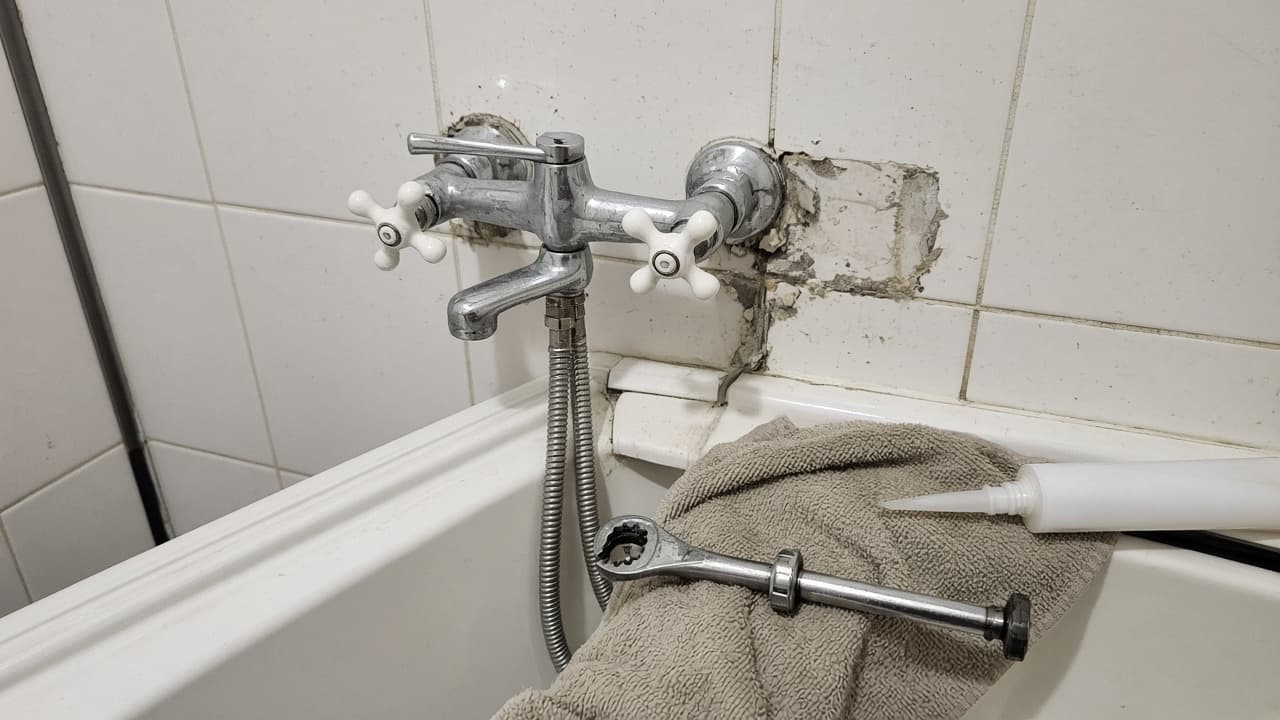
Tools
- Adjustable spanners
- Basin wrench
- PTFE tape
- Silicone sealant
- Bucket and towels
- New bath mixer
Bath mixers sit over larger pipework and often include a shower hose take-off. The job is the same idea as a basin tap (isolate, disconnect, clamp, reconnect), but access behind a bath panel is tighter and leaks are messier if you rush.
Know which mixer you have
| Type | What to buy |
|---|---|
| Deck-mounted (two holes on the bath) | Twin-pillar bath mixer or matching pair |
| Deck monobloc (one hole) | Single-hole bath mixer rated for baths |
| Wall-mounted | Wall bath mixer with correct centres (often 150 mm) |
| With shower kit | Mixer that includes diverter and hose outlet |
Measure hole centres and wall pipe centres before you order. A 150 mm wall mixer will not sit on 180 mm pipework without offsets.
Panel off, then isolate
Take the bath panel off carefully (plastic clips crack if you lever the wrong edge). Find the hot and cold isolators under the bath or in an adjacent cupboard; use the stopcock only if those are missing. Open the old mixer to drain, and check whether you are on flexis or rigid copper before you undo anything.
If the mixer only drips and the body is sound, try fixing a dripping mixer tap, fixing a dripping bath tap spout, or changing a washer first.
What you will need
| Item | Notes |
|---|---|
| New bath mixer | Match mounting style and centres |
| New washers / olives | Do not reuse crushed olives on compression joints |
| PTFE tape | For tapered threaded joints as required |
| Silicone | Seal deck or wall plate against splashes |
| Torch | Under-bath lighting |
Step-by-step
1. Disconnect supplies
Undo the hot and cold connections. Cap or bag open pipe ends if you need a tea break. Debris in bath traps is miserable.
2. Free the old mixer
For deck mixers, undo the backnuts under the rim while supporting the body. For wall mixers, undo the unions at the wall and ease the mixer off. Have towels ready; residual water always appears.
3. Clean and prepare
Scrape old silicone from the bath deck or tiles. Check threads and isolating valves operate smoothly before you commit the new mixer.
4. Fit the new mixer
Seat gaskets as supplied. Clamp deck mixers evenly so the spout sits parallel to the bath edge. For wall mixers, use any eccentric fittings needed to hit the centres, keeping the body level with a spirit level.
5. Connect shower kit if included
Fit the hose, handset, and wall bracket. Check the diverter moves freely before you silicone everything in.
6. Seal, reconnect, test
A neat silicone bead around deck bases or the wall plate keeps splash water out of the voids. Reconnect supplies, open isolators slowly, and test spout, diverter, and every joint. Run both hot and cold for a minute and re-check under the bath.
Common mistakes
- Ordering the wrong hole centres for wall mixers.
- Reusing old olives that then weep.
- Forgetting to support the mixer while tightening. Twisted copper tails crack later.
- Silicone under a gasket that needed to stay serviceable. Follow the manufacturer’s sealing method.
When to call a plumber
Stop if you need to move wall pipe centres, solder new copper in a tight void, or disturb lead pipe. Also call a pro if the bath surround is tiled shut with no panel access, or if a leak has already damaged the floor below. Fix the fabric as well as the tap.
Under-bath nuts seize like any other: how to remove a seized tap connector. Spout-only drips: how to fix a dripping bath tap spout. Sibling fittings: replace a bathroom basin tap, replace a kitchen tap.
FAQ
Can I replace a bath mixer myself on a plastic bath?
Yes, but do not over-tighten backnuts. Acrylic rims flex and crack. Use the supplied reinforcing plates if included.
Why does water drip from the shower hose when the diverter is off?
Often a worn diverter or a hose that sits below the spout and siphons. A new mixer with a sound diverter usually cures it; hanging the handset higher helps minor cases.
Do I need equal pressure for a thermostatic bath shower mixer?
Many thermostatic mixers need reasonably balanced hot and cold pressures. Check the product sheet. Combi boilers are usually fine; gravity hot with mains cold may need a compatible mixer or a plumber’s advice.
12 comments