How to Repair a Large Hole in a Plaster Wall
10 August 2026 Joe HartleyIntermediateOne day (plus drying between coats)19 comments
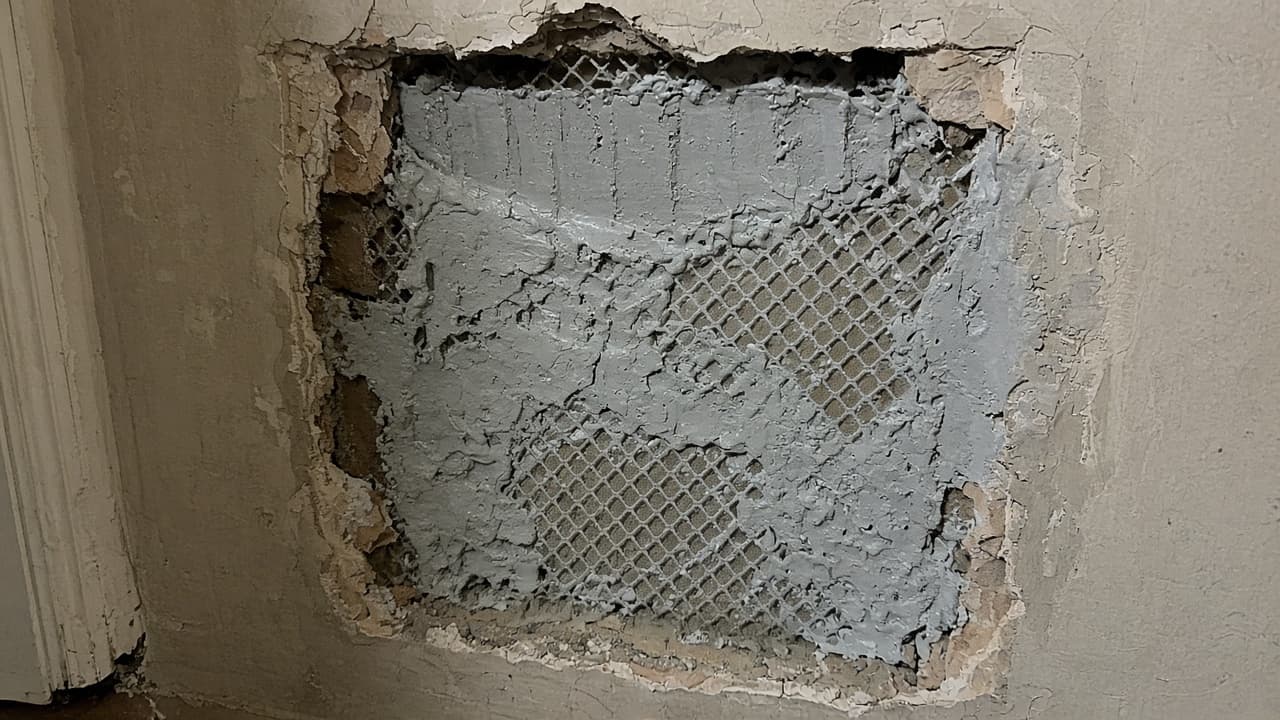
Tools
- Club hammer and cold chisel or bolster
- Wire brush
- Hawk and trowels
- Spirit level or straight edge
- Mixing bucket and paddle
A large hole in a plaster wall is usually impact damage, a chased repair gone wrong, or plaster that came away with an old fitting. On masonry, you rebuild depth in stages: sound edges, keyed brick or block, bonding coat, then a skim that meets the old face. Rushing full depth with finishing plaster leaves a soft, cracked dish.
Board walls with a punched hole need a backer repair instead: how to patch a hole in plasterboard. Widespread hollow areas belong under how to repair blown plaster.
Decide what you are looking at
| Clue | Meaning |
|---|---|
| Brick or block visible in the hole | Solid plaster-on-masonry (this guide) |
| Grey board and a hollow cavity | Plasterboard on studs or dots-and-dabs |
| Soft, wet, salty edges | Moisture problem first, then plaster |
| Hole bigger than about 0.5 m² or many scattered voids | Consider reboarding the bay: hang plasterboard on a solid wall |
Tap around the hole. Cut back any drumming plaster until the remaining edge is firm. Leaving a soft collar means the new patch fails at the join.
Check for buried cables and pipes before chiselling. Isolate power near electrical points. If the hole sits under a lintel or in a chimney breast you do not understand, stop and get advice rather than enlarging openings.
Materials that earn their keep
| Item | Notes |
|---|---|
| Bonding / undercoat plaster | Rebuilds depth on masonry |
| Finishing plaster | Final 1–2 mm face |
| Diluted PVA | Dusty brick only; thin, tacky, not glossy |
| Expanded metal lath (optional) | Deep or poorly keyed voids |
| Sharp sand (if matching old sand-and-cement) | Some pre-1960s coats need a cementitious base, not gypsum on damp walls |
| Dust sheets and mask | Chasing creates fine debris |
Step-by-step
1. Cut back and key the opening
Chop loose plaster back to a solid edge. Undercut slightly so the patch locks in. Wire-brush dust from the brick or block. Rake loose mortar joints a little if they are soft; fresh plaster needs a mechanical key.
2. Control suction
Dampen the background so it is dark but not dripping. On very thirsty brick, brush diluted PVA (about 1:4) and wait until tacky. A dry wall steals water from the mix and the bonding coat goes short and crumbly.
3. Pack the bonding coat
Mix bonding plaster to a stiff, workable paste. Press the first coat hard into the brick face and joints so it keys. Build toward the finished level in layers no thicker than the product allows (often around 8–11 mm per coat). Scratch the face of intermediate coats to key the next. Leave the final undercoat a couple of millimetres shy of the old skim so finishing plaster can sit flush.
For very deep holes, expanded metal lath plugged or dabbed to the masonry gives the bonding coat something to hang on. Do not bridge a hole with a board floating in filler; fix board properly or stick to plaster on masonry.
4. Skim flush with the old wall
When the undercoat has taken up, apply finishing plaster and flatten to the surrounding face. Feather onto the old plaster. Technique detail: how to skim a wall patch. A straight edge across the repair shows hollows before the mix goes off.
5. Dry, light sand, mist coat
Allow full drying. Thick bonding coats in a cold room can take days. Sand nibs lightly, then mist coat diluted emulsion before full paint. Skipping the mist coat is how patches flash and peel.
Mistakes that leave a dish in the wall
- Filling 20 mm of depth with finishing plaster in one go.
- Leaving dusty, dry brick so the patch fails at the interface.
- Stopping cut-back too early and bonding onto soft, hollow edges.
- Proud patches that only look flat until the raking light hits them after paint.
- Decorating over damp or salt-contaminated masonry.
When to call a plasterer or builder
Call a plasterer if the hole is part of a failing wall, if you are on lime plaster in a listed or period setting, or if matching an ornate finish matters more than a DIY face. Call a builder if the masonry itself is cracked, loose, or load-bearing details are unclear. Damp that returns as brown or mouldy marks after decorating needs moisture control: how to stop condensation stains returning on cold walls.
Same cluster: fill cracks in plaster once only hairlines remain, repair blown plaster when the face drums beyond the hole.
FAQ
How do I rebuild a large plaster hole on masonry?
Cut back to firm plaster and clean masonry, control suction, rebuild with bonding plaster in layers, skim flush, then mist coat when dry. Match the system to plaster-on-masonry, not to plasterboard methods.
How big a hole can I patch myself?
A local opening you can key and fill in a session is realistic for DIY. Once you are chasing hollow plaster across most of a wall, reboarding or a plasterer’s reskim is usually faster and flatter.
Should I use plasterboard to fill a masonry hole?
You can dot-and-dab or batten a board patch on solid walls for larger areas, but a floating offcut stuck in filler will crack. If you choose board, fix it properly (hang plasterboard on a solid wall) and tape and skim the joints.
19 comments