How to Fill Cracks in Plaster
19 July 2026 Joe HartleyBeginner1–2 hours (plus drying)19 comments
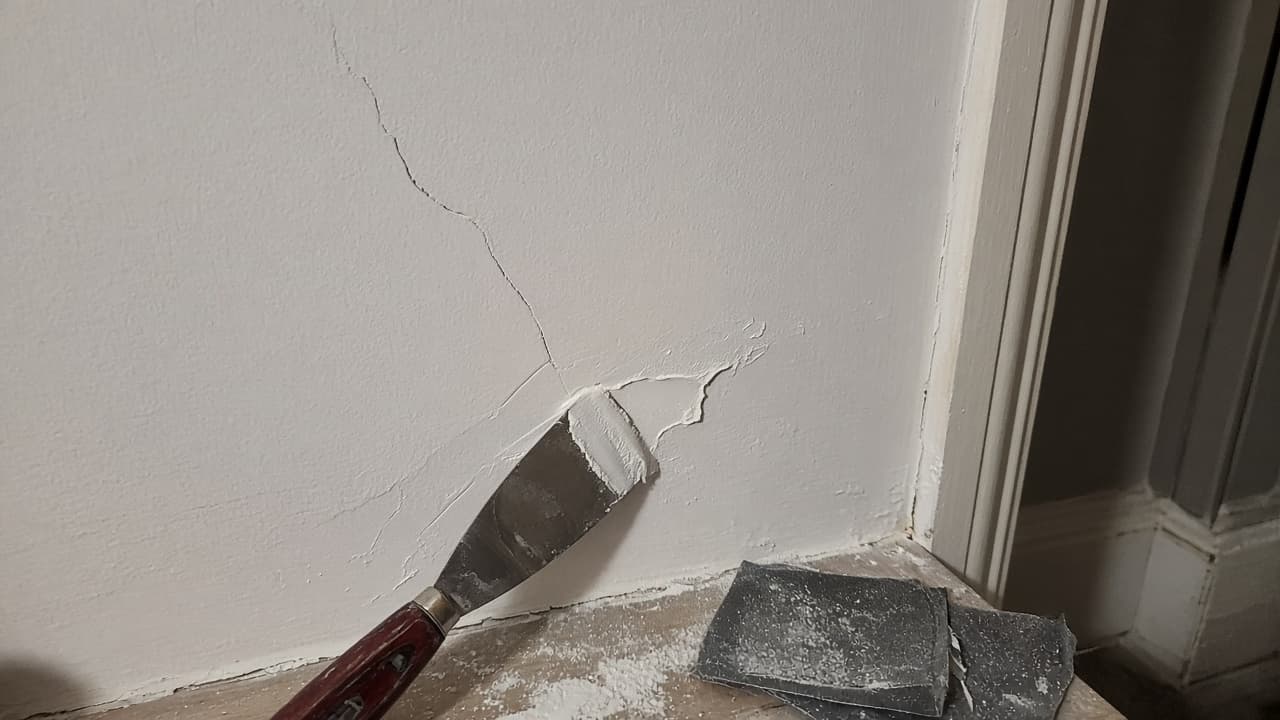
Tools
- Filling knife (50–75 mm)
- Scraper or old chisel
- Sandpaper (120–180 grit)
- Dust brush or vacuum
- PVA or proprietary primer
Hairline cracks in plaster look worse than they are. Most are shrinkage or slight movement in the skim, not a failing wall. Fill them properly and the paint finish will hide them; skim over dirt and they telegraph through every coat.
If the plaster sounds hollow when you tap beside the crack, stop filling and follow how to repair blown plaster. A soft, hollow patch will keep cracking no matter how neat the filler looks.
Crack or something else?
| What you see | Likely cause | Next step |
|---|---|---|
| Thin hairline, firm plaster either side | Shrinkage / old skim | This guide |
| Crack with hollow, drum-like sound | Blown plaster | Blown plaster repair |
| Crack radiating from a corner or lintel, widening | Structural movement | Call a surveyor or builder |
| Dark, damp-looking stain with salt bloom | Moisture / condensation | Fix the damp first; see condensation stains on cold walls |
| Hole through to plasterboard core | Impact damage | Patch a hole in plasterboard |
UK walls are often a solid background (brick or block) with a sand-and-cement or bonding coat, then a thin gypsum skim. Older homes may have lime plaster. Ready-mixed filler is fine on sound gypsum skim; deep voids need a setting filler built up in layers, not one thick blob that shrinks overnight.
What you will need
| Item | Notes |
|---|---|
| Ready-mixed or powder filler | Fine surface filler for hairlines; multi-purpose for wider cracks |
| Filling knife | Flexible blade; a stiff scraper for raking out |
| Sandpaper | 120 grit to knock proud filler, 180 for final pass |
| Diluted PVA | Optional seal on very dusty, chalky edges |
| Dust sheets | Gypsum dust settles everywhere |
Step-by-step
1. Open the crack slightly
Run a scraper or the corner of a filling knife along the crack so loose paint and crumbly plaster fall out. You want a shallow V, not a canyon. Wipe or vacuum the dust. Filler will not grip paint flakes.
2. Dampen or seal the edges
On hot, thirsty plaster, mist the crack lightly with clean water, or brush a thin coat of diluted PVA (roughly 1:4 PVA to water) and let it go tacky. Skip heavy PVA on lime plaster; water alone is safer there.
3. Press filler in firmly
Load a modest amount on the knife. Push filler into the crack at an angle so it packs the V, then scrape off flush with the surrounding wall. Overfilling leaves a ridge you sand for ages. For cracks wider than about 3 mm, fill proud by a whisker, let it set, then skim a second thin pass.
4. Sand when fully dry
Check the tin for set time. Powder fillers often sand the same day; ready-mixed can stay soft longer in a cold room. Sand lightly with the block flat on the wall so you do not dig a dish around the repair. Feel with your palm more than your eye; raking light from a work lamp shows ridges paint will pick up.
5. Spot-prime before painting
Bare filler drinks emulsion differently from the old skim. A light mist coat or primer over the patch stops flashing. Then paint the whole wall if the patch is obvious under a side light.
Mistakes that bring the crack back
- Filling over dust and loose edges so the repair falls out as a white string.
- One deep fill that shrinks and sinks overnight.
- Sanding while the filler is still soft and clogging the paper.
- Treating a hollow, blown area as a simple hairline crack.
- Painting damp or salt-stained plaster without fixing the moisture source.
When to call a plasterer
Call a plasterer if large areas are hollow, if cracks keep opening after a correct fill, or if you are dealing with historic lime that needs matching materials. Structural cracks that widen, run through brickwork, or sit near altered openings need a builder or surveyor, not more filler.
Related jobs: skim a wall patch after a bigger dig-out, repair a large hole in a plaster wall when filler alone will not bridge the void.
FAQ
How do I stop a plaster crack coming straight back?
Rake out loose material, dampen or lightly seal dusty edges, press filler into a shallow V, scrape flush, sand when dry, then spot-prime before emulsion. Match the repair to sound plaster, not to a hollow patch.
What filler should I use on plaster cracks?
Fine surface filler for hairlines on skim. A setting multi-purpose powder for wider cracks and deeper voids. Avoid flexible decorator’s caulk as the main fill on flat wall cracks; it looks different under matt paint.
Will the crack come back after filling?
Often if the wall is still moving, the plaster behind is blown, or damp is active. Stable shrinkage cracks usually stay put once cleaned and filled properly. Recurring hairlines near doors and windows may need mesh tape under a thin skim instead of filler alone.
19 comments