How to Isolate a Water Supply at the Stopcock UK
6 July 2026 Joe HartleyBeginner10–30 minutes16 comments
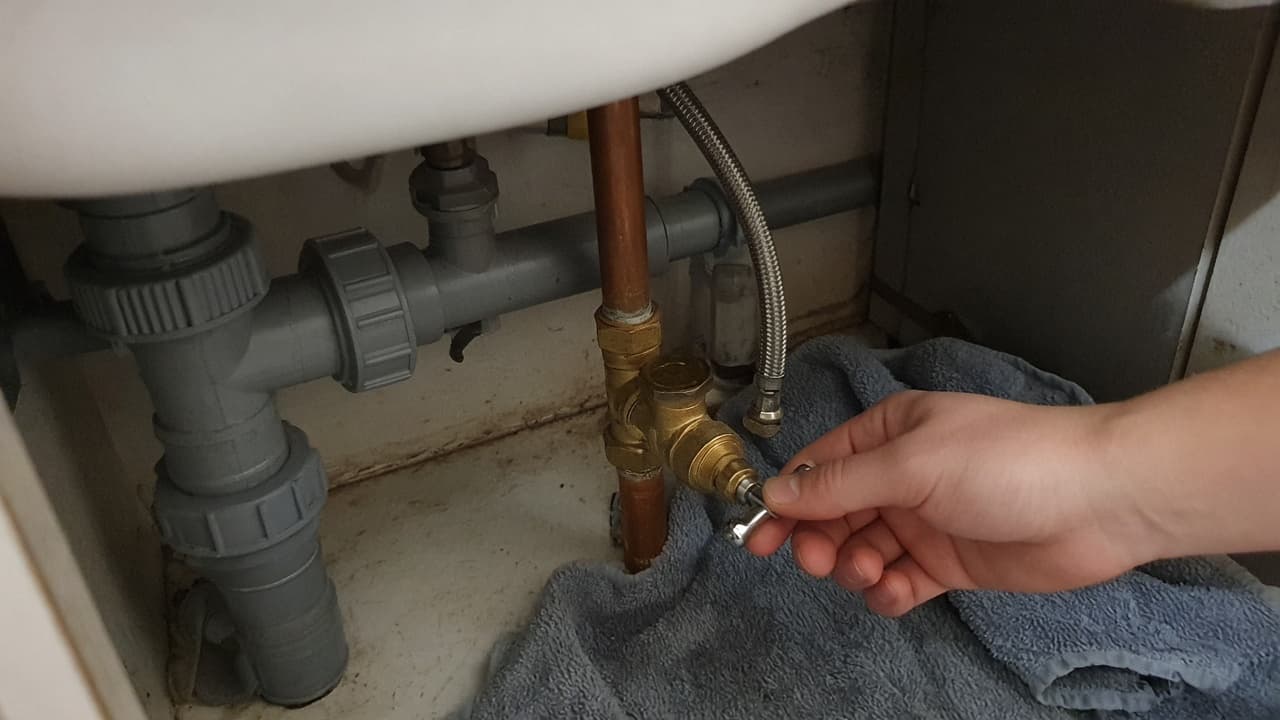
Tools
- Adjustable spanner or stopcock key (if the handle is missing)
- Torch
- Penetrating oil (only if the spindle is stiff)
- Cloth or old towel
Before you strip a tap or chase a leak, you need the water off. Isolating a water supply at the stopcock is the UK default when there is no working service valve under the fixture. Close it properly, prove the tap runs dry, then do the job. Guessing with a half-closed valve is how cupboards fill up mid-repair.
Stopcock or local isolator?
| What you find | Use it for |
|---|---|
| Small lever or screwdriver-slot valve under sink/basin/WC | That fixture only (preferred) |
| Main stopcock where the rising main enters | Whole cold mains into the house |
| Seized or missing local valve | Main stopcock, then plan a valve swap later |
If you have not found the valve yet, start with how to find your stopcock in a UK home. Local isolators save neighbours and leave the rest of the house running. Use the main stopcock when there is no local valve, the local valve spins uselessly, or you need the whole cold supply dead. Hot water on a combi will drop once cold feed is off; on a tank system the hot cylinder can still hold water until you drain or isolate that circuit separately.
If you only need one tap off and the under-sink valve works, close that instead of the whole house. When that valve is dead, replace it properly: how to replace an isolation valve.
Where UK stopcocks hide
- Under the kitchen sink, often at the back left or right of the cupboard.
- In a utility cupboard, under-stairs void, or garage where the rising main comes through the floor or wall.
- Outside in a meter chamber (water company stop) with a square spindle. That one is for emergencies and meter work; your indoor stopcock is what you should use for DIY.
Job-specific detail: Older brass stopcocks often sit on a short vertical riser with a wheel handle that has been painted solid. The paint is not structural. Scrape enough off the flats or wheel rim to get a spanner purchase rather than twisting the pipe with grips on the body.
Shutting it down
1. Tell anyone else in the house
Boilers, washing machines, and showers hate a surprise dry run. Give people five minutes’ warning.
2. Open a cold tap downstairs
A kitchen or cloakroom cold tap left open shows you when flow has stopped and vents the pipe so you are not cracking unions under pressure.
3. Close the stopcock
Turn a wheel handle clockwise until it stops firmly. On a lever-type ball valve, move the lever across the pipe (closed when the lever is at right angles to the pipe run). Do not force a frozen spindle with a huge lever; that shears the shaft inside the packing.
4. Wait and watch the open tap
Flow should dwindle to drips, then nothing. A slow dribble that never dies means the stopcock is not sealing. Try seating it again. If it still weeps, stop DIY on that circuit and call a plumber before you open joints.
5. Drain what you need
Open the tap or appliance you will work on. Catch residual water in a bowl. Toilet cisterns and pipes higher in the house may still hold water until you flush or open those outlets.
6. Work, then reopen slowly
When the job is done, close the drain-off tap, open the stopcock gradually, and listen for rush then silence. Check joints you disturbed. Bleed air from upstairs taps if they spit for a minute.
Mistakes that leave you soaked
- Assuming the under-sink lever is closed when it is only half across. Confirm with the open tap test.
- Forcing a painted-solid wheel until the rising main twists in the floor.
- Isolating cold and forgetting a separate hot feed still needs attention on some tank systems.
- Leaving the stopcock jammed shut for weeks after a “temporary” fix, then finding it will not open when you need water back.
- Working on a shared stopcock in a flat without warning other households.
When to call a plumber
Call a plumber if the stopcock will not turn, turns forever without stopping the flow, or weeps from the spindle packing when you move it. Lead pipe, a meter-only outdoor stop with no indoor valve, and communal supplies in blocks are also stop points. Fitting a new indoor isolator after a seized main stop is often cheaper than flooding a kitchen mid-job.
Related reading in this cluster: find your stopcock in a UK home, replace an isolation valve, fix a leaky tap, change a tap washer, replace flexible tap connectors.
FAQ
How do I know the stopcock has actually shut the supply?
Open a known cold tap downstairs before you close the valve, then watch it. Flow should dwindle to nothing. A never-ending dribble means the stopcock is not seating, or you turned a local isolator on the wrong pipe.
Clockwise or anti-clockwise to turn off?
Wheel and gate-style stopcocks close clockwise (righty-tighty). Lever ball valves close when the lever sits across the pipe, not in line with it.
Why is water still running after I closed the stopcock?
The valve is not seating, you closed a local isolator on the wrong pipe, or a tank-fed hot circuit is still draining down. Re-check which valve you turned, open a known cold outlet to prove mains cold is dead, and call a plumber if flow continues from the rising main.
16 comments