How to Draught-Proof Windows and Doors
27 July 2026 Joe HartleyBeginner2–4 hours6 comments
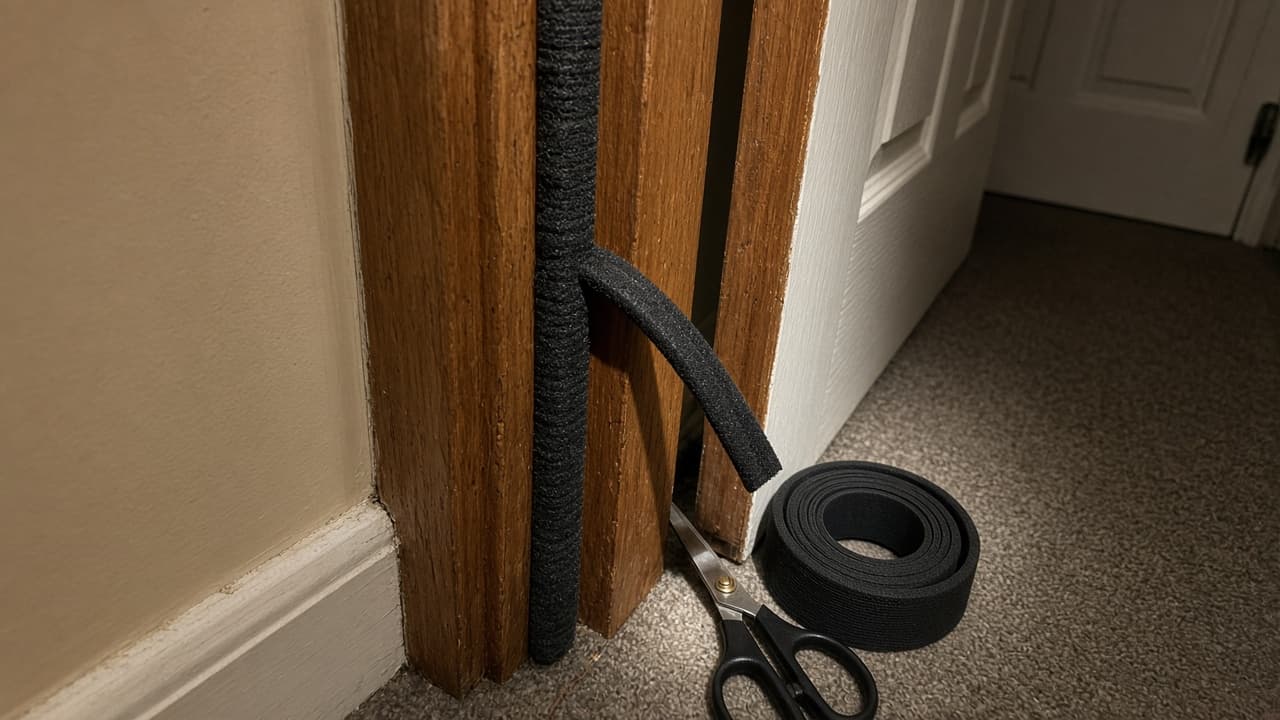
Tools
- Incense stick or thin paper for finding draughts
- Tape measure
- Scissors or craft knife
- Self-adhesive foam or rubber seal
- Brush strips or door bottom seal
- Screwdriver and bradawl
- Cleaning cloth and mild detergent
- Letterbox brush or flap seal (if needed)
Cold air around windows and doors makes rooms feel colder than the thermostat says. How to draught-proof windows and doors is mostly finding the gaps, cleaning the surface, and fitting the right seal so sashes and doors still close. Do not seal trickle vents shut or block extract fans; you want fewer accidental leaks, not a sealed damp box.
If glass runs with water every morning, draught seals alone will not fix it. Use how to stop condensation on windows, and clean growth with how to treat mould on walls safely. Single glazing that stays icy may need how to fit secondary glazing film as well as edge seals.
Find the leaks before you buy seals
On a windy day, close doors and windows. Hold an incense stick or a strip of tissue near:
- Meeting rails on sashes
- Opening casement edges
- Door edges and the threshold
- Letterboxes and keyholes
- Gaps where the frame meets the plaster (sometimes a decorator’s caulk job, not a brush strip)
Mark the worst spots with tape. Buy seals for those gaps, not a random multipack for every edge in the house.
Match the seal to the gap
| Location | Usual fix |
|---|---|
| Casement or door side gaps (even, small) | Self-adhesive foam or rubber compression seal on the frame rebate |
| Worn or sliding contact edges | Brush pile strip |
| Door bottom over a hard floor | Brush or hinged threshold seal screwed to the door bottom |
| Carpeted threshold | Brush seal that clears the pile; thick foam on the bottom often drags |
| Letterbox | Brush kit or dual flap fitted to the letter plate |
| Sash windows | Brush or carrier systems made for sashes; temporary film is a winter option via secondary glazing guides |
Leave trickle vents open. Permanently blocking designed ventilation pushes moisture onto cold glass and corners.
Step-by-step
1. Clean and dry the frame
Wipe the rebate with a cloth and mild detergent. Adhesive foam fails on dust and old polish. Let it dry fully. Cold, damp frames need a warm-up before sticky seals take.
2. Measure twice, cut once
Close the window or door and note where the leaf meets the frame. Cut foam or brush slightly long, then trim. Corners should meet neatly; overlapping fat blobs stop the catch engaging.
3. Fit compression seals on opening lights and doors
Stick foam or rubber on the frame where the opening part compresses it when shut. Start with a thin profile if you are unsure; a seal that is too fat springs the door open or strains the latch. For brush seals on doors, screw the carrier straight and test the swing before driving every screw hard.
4. Seal the door bottom
Offer up a brush or hinged seal with the door closed on a piece of paper. You want light drag, not a plough. On uneven quarry tiles, a hinged flap often beats a rigid brush. Do not seal over a required undercut for a boiler or fire door without checking what that door needs.
5. Sort letterbox and small holes
Fit a letterbox brush or secondary flap. Unused keyholes can take a cover; keep active locks usable. Do the letterbox before you declare the hallway done: it is often the biggest hole in the front door.
6. Recheck and live with it a week
Test with incense again. Open and close daily for a few days. If a sash sticks or a door no longer latches, thin or reposition the seal rather than forcing the furniture.
Loft heat loss and a bare hatch still dwarf a tidy lounge door. If upstairs is freezing from above, do how to insulate a loft and how to insulate a loft hatch as well.
Common mistakes
- Sealing trickle vents and bathroom extract paths “for warmth”.
- Foam so thick the door never latches and the household wedges it open again.
- Sticking seals to flaking paint that peels off in a fortnight.
- Ignoring the letterbox while fussing over a hairline casement gap.
- Treating failed double-glazing misting as a draught-seal problem.
When to call a pro
Call a joiner or window fitter if frames are rotten, sashes are binding from structural movement, or fire doors need certified seals. Gas Safe advice matters before you change undercuts or airflow near open-flued appliances. A glazier owns failed sealed units; draught strip will not clear mist between panes. For cold single glazing that still loses heat after seals are sound, try fit secondary glazing film.
Related reading: stop condensation on windows, treat mould on walls safely, fit secondary glazing film, and insulate a loft hatch.
FAQ
Will draught-proofing cause damp?
It can if you block intended ventilation while moisture production stays high. Seal accidental gaps; keep trickle vents, extractors, and a way to air the house. Condensation on glass means moisture load or cold glass, not a demand for more sealed corners alone.
Foam seal or brush strip?
Foam and rubber suit even closing gaps where the leaf compresses the seal. Brushes suit sliding contact, door bottoms, and slightly uneven gaps. Many doors need both: foam on the sides, brush at the bottom.
How long do self-adhesive seals last?
Cheap foam flattens in a season or two on a busy front door. Clean fitting and a quality rubber or brush carrier last longer. Replace seals when they no longer spring back or the adhesive lets go.
6 comments