How to Fit Secondary Glazing Film
2 August 2026 Joe HartleyBeginner45–90 minutes per window14 comments
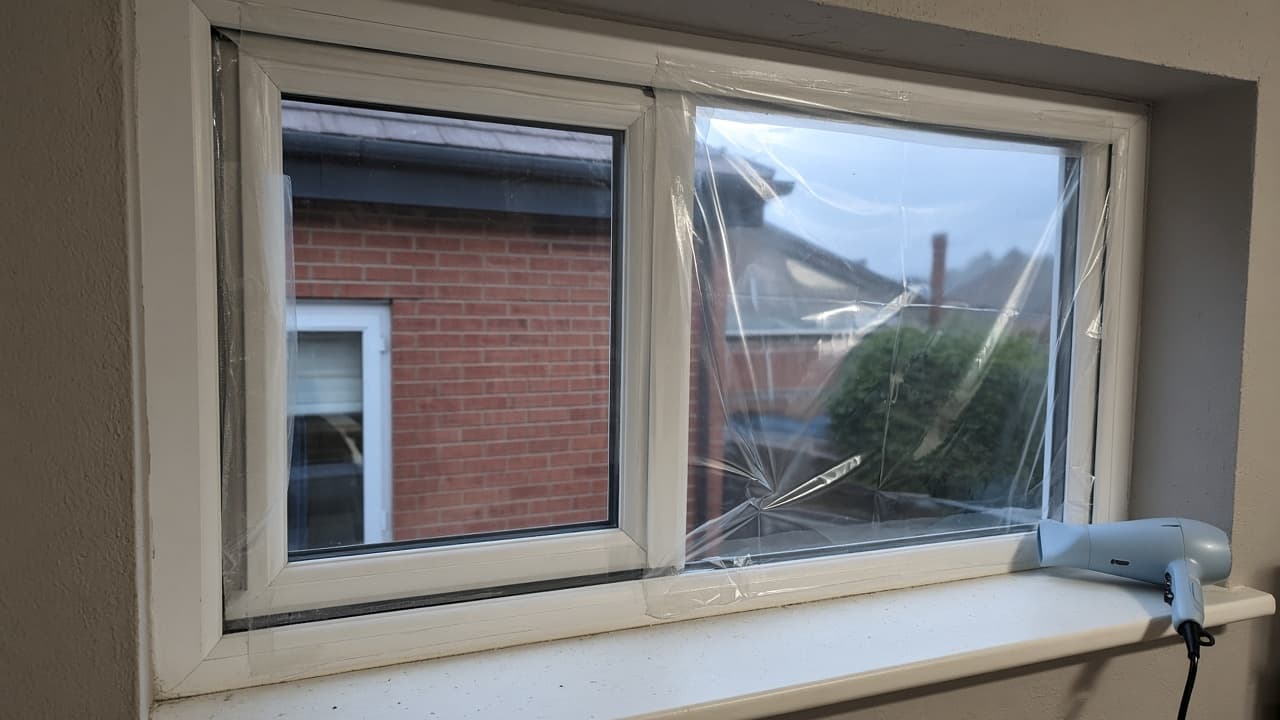
Tools
- Secondary glazing film kit (film + double-sided tape)
- Hairdryer
- Scissors or craft knife
- Clean cloths and glass cleaner
- Tape measure
- Spirit level (optional, for checking tape lines)
Secondary glazing film is a thin clear sheet stuck to the window frame with double-sided tape, then shrunk tight with heat. It creates a sealed air gap that cuts draughts and takes the chill off single glazing. It will not turn a rotten sash into a modern unit, but for one winter on a cold bedroom or bay it is a cheap, reversible job.
If moisture is pooling between sealed double-glazed panes, the unit seal has failed. Film on the room side will not fix that; you need the sealed unit replaced.
Film, panels, or leave it alone?
| Option | Best when | Watch-outs |
|---|---|---|
| Shrink film | Renting, one cold season, flat timber or uPVC frames | Needs a clean, continuous tape line; hard on ornate mouldings |
| Rigid secondary panels | You want openable secondary glass and a neater finish | Cost and frame depth; a joiner or window fitter for a proper frame |
| Do nothing yet | Condensation is mostly from wet habits, not cold glass alone | Fix moisture load first via how to stop condensation on windows |
Film works best on frames you can wipe clean and tape flat. Heavy moulding, peeling paint, or flaking varnish will break the seal. Do not tape over trickle vents you still need open; leave those clear or use a panel system that keeps them usable.
What you will need
| Item | Notes |
|---|---|
| Film kit | Clear shrink film plus the kit’s double-sided tape. Buy enough for the glass area plus overlap. |
| Hairdryer | Ordinary domestic dryer. Heat guns can scorch film and frames. |
| Cleaning kit | Glass cleaner, cloths. Grease or silicone polish kills adhesion. |
| Cutting tools | Scissors to rough-cut; craft knife for the final trim against the tape. |
| Tape measure | Size each opening; bays often have uneven panes. |
Work when the room is dry and the frame is above dew point. Fitting film onto a damp, cold sill traps moisture in the gap.
Step-by-step
1. Clean the frame and glass
Wipe the inner frame faces where the tape will sit: top, bottom, and both sides. Degrease; fingerprints and polish residue are the usual reason tape lifts in week two. Clean the glass so you are not sealing dust into view.
2. Plan the tape line
Decide whether you are taping on the sash face (closer to the glass) or on the outer lining. Closer to the glass usually means a smaller air gap and a tidier look; too close and you fight hinges and handles. Keep the tape on one continuous plane so the film does not kink across a step.
Leave trickle vents and openable night vents clear. Blocking every path of fresh air pushes condensation onto colder walls instead.
3. Apply the double-sided tape
Stick the tape in a closed rectangle. Butt joints tightly at corners; gaps let the film suck in cold air. Press firmly along the whole run. On uPVC, wipe again if plasticisers leave a film.
4. Rough-cut and hang the film
Cut a sheet larger than the opening by at least 50 mm on each side. Peel the tape backing a section at a time and press the film on, working from the top down. Keep it loosely taut, not drum-tight yet. Wrinkles are normal before heat.
5. Seal the edges, then shrink
Run your hand around the perimeter so every millimetre of film meets the tape. Warm the sheet with the hairdryer in slow passes, holding the dryer a hand’s width away. Start at the centre and work out. The film should go clear and flat; stop as soon as wrinkles disappear. Overheating makes shiny thin patches that tear later.
6. Trim the surplus
Once cool, trim the excess film against the outer edge of the tape with a sharp craft knife. Leave the taped seal intact. A ragged edge that lifts is an invitation for draughts.
7. Check overnight
Next cold morning, feel for draughts at the corners and look for mist inside the sealed gap. A little temporary fog after fitting can clear; ongoing wetness means the room-side seal leaks or you trapped a wet frame. Refit rather than ignore it.
Common mistakes
- Taping onto dusty emulsion or waxed timber. The tape peels, the film balloons, and you blame the kit.
- Shrinking with a heat gun on full blast. You get shiny thin spots and a melted bead of tape.
- Sealing every trickle vent shut “for warmth” in a wet household. Condensation simply moves to the coldest corner.
- Fitting over a still-wet window after wiping morning dew. You bottle that water between glass and film.
- Expecting film to cure black mould on the reveal. Treat the mould and moisture separately with how to treat mould on walls safely.
When to call a pro
Call a window fitter or joiner if the sash is rotten, the cords are shot, or the frame will not take a continuous tape line. Failed sealed units need reglazing, not film. Listed or conservation windows may need a reversible panel system rather than sticky film; check before you stick anything permanent-looking.
Related reading: stop condensation on windows, draught-proof windows and doors, stop condensation in a north-facing bedroom, and treat mould on walls safely.
FAQ
Will secondary glazing film stop condensation on the glass?
It often reduces room-side misting by warming the inner surface of the air gap. It does not remove moisture from cooking, showers, or indoor drying. Pair film with ventilation and heating habits from the condensation guide linked above.
Can I open the window after fitting film?
Not without cutting or peeling the sheet. Treat film as a seasonal seal for windows you rarely open, or choose openable secondary panels instead.
How long does shrink film last?
One hard UK winter is normal if the tape holds. Sun, cleaners, and curious pets shorten that. Peel carefully in spring; leftover adhesive usually comes off with the kit’s recommended wipe or a little warm soapy water.
Is film safe on uPVC frames?
Yes if the frame is clean and the tape is rated for plastic. Avoid solvents that fog or craze the uPVC when you remove the tape in spring.
14 comments