How to Unblock a Toilet
21 June 2026 Joe HartleyBeginner20–60 minutes19 comments
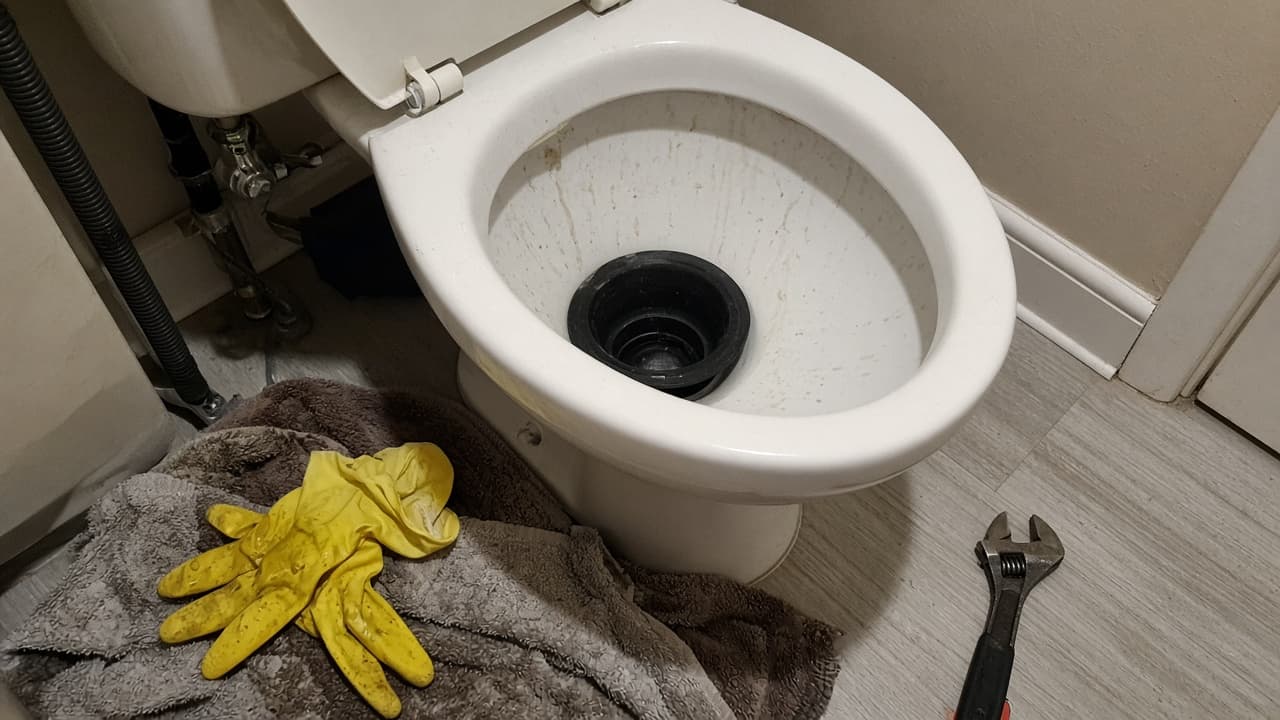
Tools
- Flange toilet plunger
- Rubber gloves
- Old towels and a bucket
- Closet auger (toilet snake) if plunging fails
A blocked toilet rises instead of dropping, or the flush returns as a slow swirl. Most UK household blockages sit in the trap or just beyond the pan connector. Unblocking a toilet is usually a plunger job if you use the right flange cup and keep the water from flooding the floor.
Do not keep flushing. Each attempt adds water you will mop later.
Local jam or bigger problem?
| What you see | Likely cause |
|---|---|
| Only this toilet backs up; basin and bath drain fine | Blockage in the pan trap or short run to the soil stack |
| Toilet and basin both slow or gurgling | Shared waste or soil stack issue (often beyond DIY) |
| Water rises then drops very slowly over hours | Soft blockage (paper, wipe) still in the trap |
| Solid object flushed (toy, wipe pack, cotton buds) | Need an auger; chemicals will not dissolve it |
| Overflow pipe outside dripping after failed flushes | Cistern still filling while the pan is full; stop using it |
If more than one fitting backs up, stop. That is usually a drain or stack problem. A constantly dripping overflow while you diagnose is a separate cistern issue: see how to diagnose a constantly dripping overflow and how to fix a dripping overflow pipe outside.
What you will need
| Item | Notes |
|---|---|
| Flange toilet plunger | Soft rubber flange that folds into the trap. A flat sink plunger leaks around the rim and wastes effort. |
| Gloves and eye protection | Splash happens. |
| Towels / shallow tray | Catch overflow at the base before it reaches the bathroom door. |
| Closet auger | Short toilet snake with a protective sleeve so you do not chip the glaze. |
| Hot (not boiling) water and washing-up liquid | Optional softener for paper jams after a successful plunge. |
Avoid caustic drain cleaners in a toilet. They rarely clear solid blockages, can splash back onto skin and chrome, and make the next plumber’s job nastier if you have to call one.
Step-by-step
1. Protect the floor and drop the water level
Lay towels around the base. If the bowl is near the rim, bail into a bucket until you have a few centimetres of water left. You need enough water to cover the plunger cup; you do not need a flood waiting to tip over.
Lift the cistern lid and close the isolating valve on the fill pipe if you can reach it, or hold the float down so a failed flush does not refill the pan. On older ballcock cisterns, you can gently lift the arm to stop the fill.
2. Seat the flange plunger properly
Fold the flange into the trap opening so the cup seals against the glaze. A dry rim seal is useless; keep a little water in the bowl. Hold the handle vertical so the cup does not rock and break the seal on every stroke.
3. Plunge with short, firm strokes
Start with gentle pushes to expel air, then ten to twenty firm thrusts without breaking the seal. Pull up slightly on the last stroke to tug the blockage toward you. Listen for a gurgle and watch the water drop.
Flush once only when the level has fallen. If it clears and stays down, you are done. If it rises again, repeat plunging before you reach for the auger.
4. Use a closet auger if plunging fails
Feed the auger into the trap with the sleeve against the glaze. Crank slowly while pushing; when you feel resistance, work past it rather than forcing a hard jab that can crack the pan. Pull back debris into a bucket. Do not shove a metal sink snake unprotected into the trap: it scratches porcelain and snags.
5. Test with a controlled flush
Open the fill again. Flush once and watch for a clean drop and a normal refill. Wipe the base dry and check for weeps at the pan connector. A soft wax or foam seal that was disturbed by heavy rocking may need a plumber later, but most DIY plunging does not move the pan.
Mistakes that make it worse
- Using a flat sink plunger that never seals in the trap.
- Flushing repeatedly “to see if it goes”.
- Pouring boiling water into a vitreous china pan (thermal shock risk) or tipping acid cleaners into standing water.
- Forcing a wire coat hanger that chips the glaze and leaves metal in the trap.
- Ignoring other fittings that are also backing up.
When to call a plumber
Stop if the blockage returns within a day, if upstairs and downstairs toilets fail together, if sewage smells come from other wastes, or if you cannot pass an auger past a hard stop. Shared drains, collapsed clay, and fatbergs in the soil stack are not plunger jobs. Isolate the cistern fill while you work if needed: how to isolate a water supply at the stopcock UK. If an outdoor overflow keeps dripping after the pan is clear, treat the cistern separately: how to fix a dripping overflow pipe outside. Work out which pipe is wet first with how to diagnose a constantly dripping overflow.
FAQ
How do I unblock a toilet without flooding the bathroom?
Bail excess water first, seal a flange plunger in the trap, and plunge firmly. If that fails, use a closet auger. Skip caustic chemicals. Call a plumber if other fittings back up or the jam returns quickly.
Can I unblock a toilet without a plunger?
Sometimes hot (not boiling) water and washing-up liquid soften a paper jam overnight, but a flange plunger is faster and more reliable. An auger is the next tool, not bleach.
Why does my toilet keep blocking?
Too much paper, wet wipes (even “flushable” ones), a partial foreign object, or a failing soil run. Recurring blockages need a plumber with rods or a camera, not more plunging.
Is it safe to use chemical unblockers in a toilet?
Best avoided. They struggle with solids, can damage seals and chrome, and create a splash hazard. Mechanical clearing is the safer DIY path.
19 comments