How to Secure a Shed Against Theft
30 June 2026 Joe HartleyBeginner2–4 hours5 comments
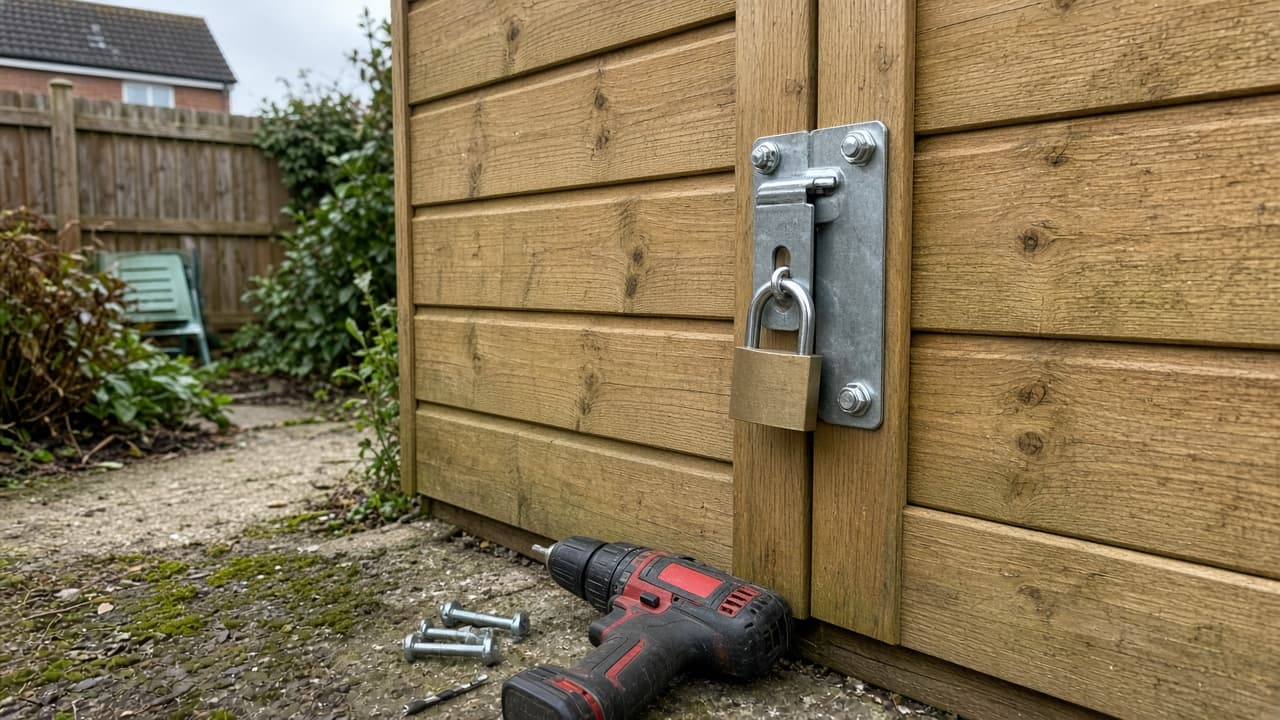
Tools
- Cordless drill/driver
- Drill bits for timber and masonry
- Spanners or socket set
- Spirit level and tape measure
- Pencil and square
- Hacksaw or bolt cutters (for removing old weak hasps)
A garden shed is a soft target if the door has a flimsy hook-and-eye and the windows lift out with a putty knife. Securing a shed against theft will not stop a determined thief with time and tools, but it does deter the five-minute garden walk-through. Fit hardware that resists leverage, fix the shed to the ground if it can be lifted, and treat glass as a weak point.
What to harden first
| Weak point | Typical DIY upgrade |
|---|---|
| Door latch | Coach-bolted hasp and staple + closed-shackle padlock |
| Shed base | Ground anchors or coach screws into a solid slab / bearers |
| Windows | Internal bars, laminated film, or screwed beads; opaque blinds |
| Hinges | Non-return screws or coach bolts so the door cannot lift off |
| Contents | Mark tools; do not advertise bikes and mowers through clear glass |
Insurance policies sometimes ask for a specific lock standard. Check yours before you buy the cheapest padlock on the aisle end.
Kit worth buying
| Item | Notes |
|---|---|
| Heavy hasp and staple | Steel, not thin pressed tin; fix with coach bolts through the door |
| Closed-shackle padlock | Harder to attack with bolt cutters than a long open shackle |
| Coach bolts, washers, nuts | Through-fix; nuts inside the shed |
| Ground anchor kit | Rated for sheds / motorbikes; match base type (slab vs timber) |
| Security screws or clutch heads | On hinge leaves and window beads |
| Wire mesh or bar grille | For windows you still want light through |
Step-by-step
1. Replace the toy latch
Remove hook-and-eye or thin turn-buttons. Offer the hasp so the staple sits on the frame and the hinge leaf on the door (or follow the maker’s orientation). Drill through, fit coach bolts with the heads outside and nuts inside. Large washers stop the nuts pulling through soft cladding.
Job-specific detail: On featheredge or thin shiplap, back the inside face with a scrap of plywood behind the nuts. Cladding alone crushes and the hasp loosens within a season of slamming the door.
2. Fit a serious padlock
Use a closed-shackle padlock sized to the staple. Oil it lightly. Keep a spare key indoors, not in the adjacent garage “hiding place” everyone tries first.
3. Stop the door lifting off its hinges
If hinge pins are exposed, fit hinges with non-return security screws, or coach-bolt the hinge leaves through the jamb and door. Some thieves ignore the lock and lift a pinned door straight up.
4. Anchor the shed to the ground
Empty panel sheds on slabs can be jacked or slid. Options:
- Concrete or paving base: Drill into the slab (or into treated bearers bolted to the slab) and fit ground anchors or angle brackets as the kit allows.
- Timber base on slabs: Coach-screw the floor frame to the base structure; add anchors that engage both shed floor and ground fixings.
Do not rely on the shed’s own weight if it stores bikes or power tools worth stealing.
5. Harden the windows
Clear acrylic or thin horticultural glass is quiet to break. Practical upgrades:
- Fit an internal grille or flat bar screwed into the framing, not only into cladding.
- Replace lift-out beads with screwed beads (security screws from the inside).
- Add a privacy film or curtain so passers-by cannot inventory the mower.
- If you are refitting openings properly, revisit how to fit shed windows and doors.
6. Tidy the tell-tales
Padlocks left unlocked on the staple, ladders leaning against the shed, and open side gates invite a look. Motion lights help. Alarms are optional extras once the mechanical basics are solid.
Common mistakes
- Screwing a hasp into cladding with short woodscrews that pull out under a crowbar.
- Fitting a strong padlock onto a staple held by two rusty nails.
- Ignoring windows while armouring the door.
- Leaving the shed unanchored on smooth slabs after filling it with tools.
- Painting over security hardware later without masking, then seizing the padlock (treat and paint a shed after hardware is planned).
When to call a pro
Call a locksmith or security fitter if your insurer demands a specific lock certificate, if you need a metal security door in a high-risk area, or if the shed structure is rotten and will not take coach bolts. Call a builder if the base itself is failing; locks on a collapsing floor are theatre.
Related: build a garden shed, fit shed windows and doors, assemble a shed, treat and paint a shed.
FAQ
Is a padlock enough to secure a shed?
A good closed-shackle padlock on a coach-bolted hasp is the minimum door upgrade. Alone it fails if hinges lift off, windows open, or the whole shed slides. Combine lock, hinge, window, and ground fixes.
Should I board over shed windows?
Boarding kills natural light but removes the smash-and-grab view. Grilles plus privacy film are a middle path. Choose based on what you store and how you use the shed as a workspace.
Can I secure a shed on paving slabs?
Yes. Fix the floor frame to the base and use ground anchors or brackets that engage solid slabs or buried anchors as the kit design allows. Smooth unanchored slabs are a common DIY weak spot.
Will security screws void my shed warranty?
Unlikely for adding locks, but drilling cladding can affect appearance guarantees. Keep bolts through framing where you can, and check the maker’s guidance for panel kits.
5 comments