How to Fix a Cold Radiator
24 July 2026 Joe HartleyIntermediate30–90 minutes9 comments
Tools
- Radiator bleed key
- Cloth and shallow bowl
- Adjustable spanner (for lockshield cap / gland checks)
- Notepad for lockshield turn counts
- Boiler pressure gauge reading (combi / sealed systems)
One cold radiator with a warm boiler and hot neighbours is almost never a mystery gas fault. Fix a cold radiator by ruling out air, a shut or stuck valve, and bad balance in that order. Stay on the water side of the system. Boiler casings, gas pipe, and sealed-system safety parts are Gas Safe territory.
What the cold pattern tells you
| Pattern | Likely cause | First fix |
|---|---|---|
| Top cold, bottom warm | Air in that panel | Bleed the radiator |
| Whole rad cold, pipes either side may feel different | TRV shut, stuck pin, or lockshield closed | Free TRV / check lockshield |
| Cold middle, warmer edges (or the reverse after years of sludge) | Circulation / sludge | Bleed and valves first; sludge needs a wider flush later |
| Several rads cold, boiler locking out or noisy | System or appliance fault | Do not open the boiler; Gas Safe if the gas appliance misbehaves |
If the house is on a combi, glance at the pressure gauge before you chase valves. Very low pressure can leave distant radiators lazy even when valves are open. Topping up via the filling loop (as your boiler manual shows) is fine; stripping the case is not.
Work the simple checks first
1. Confirm the obvious settings
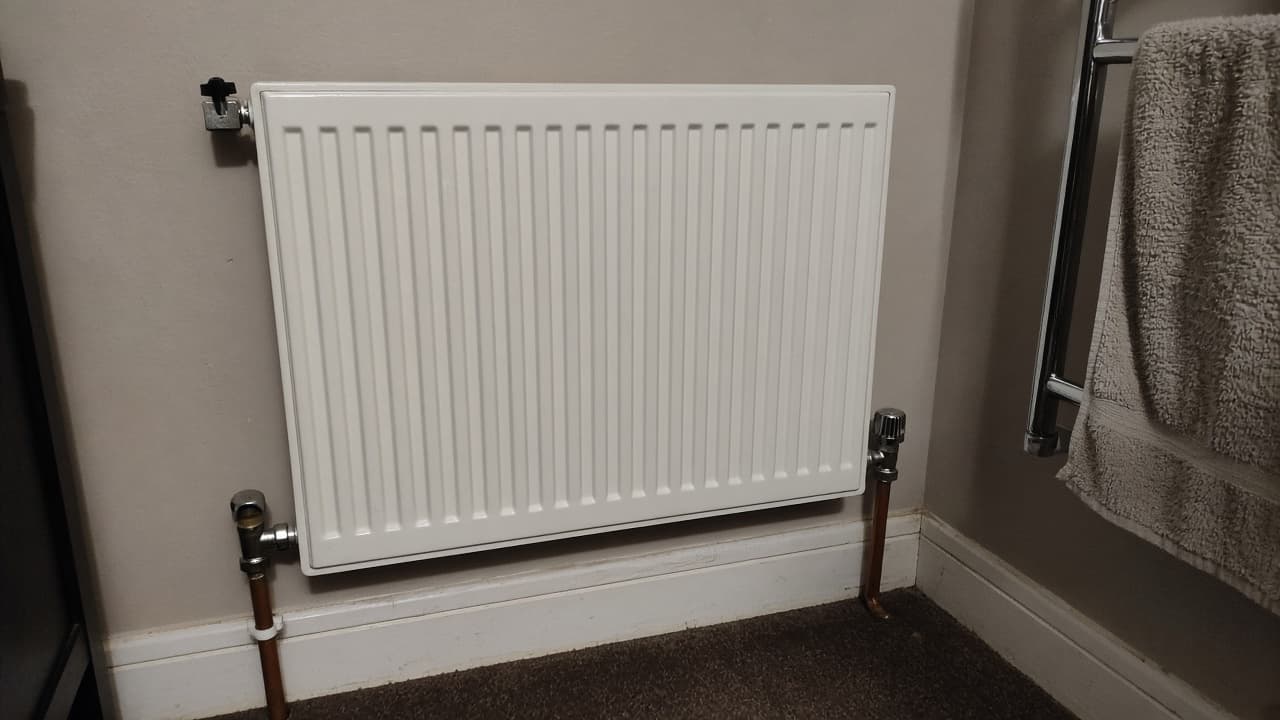
TRV head not on frost-only. Room thermostat calling for heat. Timer and boiler showing a heat demand. Towel rails and designer rads sometimes have a different bleed position; find the square pin before you assume the panel is dead.
2. Bleed properly
Use the bleed key, cloth, and bowl. Close the key when water, not air, comes out. Recheck combi pressure afterwards and top up if it dropped. Full method: how to bleed a radiator.
3. Free a sticky TRV pin
Remove the plastic head (usually unscrews or clips off). Underneath is a small pin. Press it down firmly a few times with a fingernail or soft tool. If it was stuck up, the valve was held closed even with the head on max. Refit the head set to a mid number and feel for heat after ten minutes.
Job-specific detail: A TRV head jammed against a thick curtain or inside a boxed cover reads the warm pocket of air around itself and throttles the rad while the room stays chilly. Pull soft furnishings clear of the sensor before you condemn the valve.
4. Read the lockshield
The lockshield is the valve without the numbered head, usually under a push-on cap. If someone closed it fully during decorating and never counted the turns back, that radiator will stay cold forever. Open it a little at a time (half-turn steps), noting where you started, until the rad begins to warm, then refine against neighbouring rooms. If the valve itself is seized or weeping, replace it: how to replace a lockshield valve.
5. Swap or service a failed TRV body
If the pin will not move, the valve weeps, or heat never arrives with the pin held down, plan a body swap: how to replace a TRV. That is pipework DIY with isolation and towels, not boiler work.
6. Know when “cold” means sludge or a wider fault
Black water that smells stale when you bleed, repeated cold spots after air is gone, and several lazy radiators together point beyond a single valve. Chemical flush or powerflush territory is a heating engineer job. A silent boiler, error codes, or smell of gas means stop and call Gas Safe.
Mistakes that waste an evening
- Bleeding with the heating screaming hot and catching a faceful of pressurised sludge.
- Opening the lockshield fully on every rad “to help,” which unbalances the whole upstairs.
- Replacing a TRV head when the pin under it is stuck and the new head just sits on a closed valve.
- Ignoring low combi pressure, then blaming the furthest bedroom radiator.
- Opening the boiler case because an online tip mentioned a diverter valve.
When to call a Gas Safe engineer or heating engineer
Call Gas Safe for anything on the gas side, flue, or boiler internals, and for lockouts you cannot clear with the maker’s simple reset guidance. Call a heating engineer or plumber for sludge, repeated pressure loss, pinholed radiators, or valve jobs you cannot isolate. One cold radiator with hot neighbours is usually bleed, pin, or lockshield. A cold house with an unhappy boiler is not a DIY strip-down.
Cluster links: bleed a radiator, replace a TRV, replace a lockshield valve.
FAQ
Why is only one radiator cold?
Most often air at the top, a TRV pin stuck closed, or a lockshield left shut. Bleed, free the pin, then check the lockshield turn position before you assume the boiler is at fault.
Should I bleed all radiators if one is cold?
Bleed the cold one first. If others have cool tops, bleed those too, then restore combi pressure. You do not need to open every valve in the house for a single airlocked panel.
When is a cold radiator a Gas Safe issue?
When the boiler fails to fire, shows fault codes you cannot clear by the handbook, you smell gas, or the problem sits inside the appliance rather than on radiator valves and bleed screws. Radiator valves and bleeding stay on the water side for competent DIY.
9 comments