How to Bleed a Radiator
1 August 2026 Joe HartleyBeginner15–40 minutes7 comments
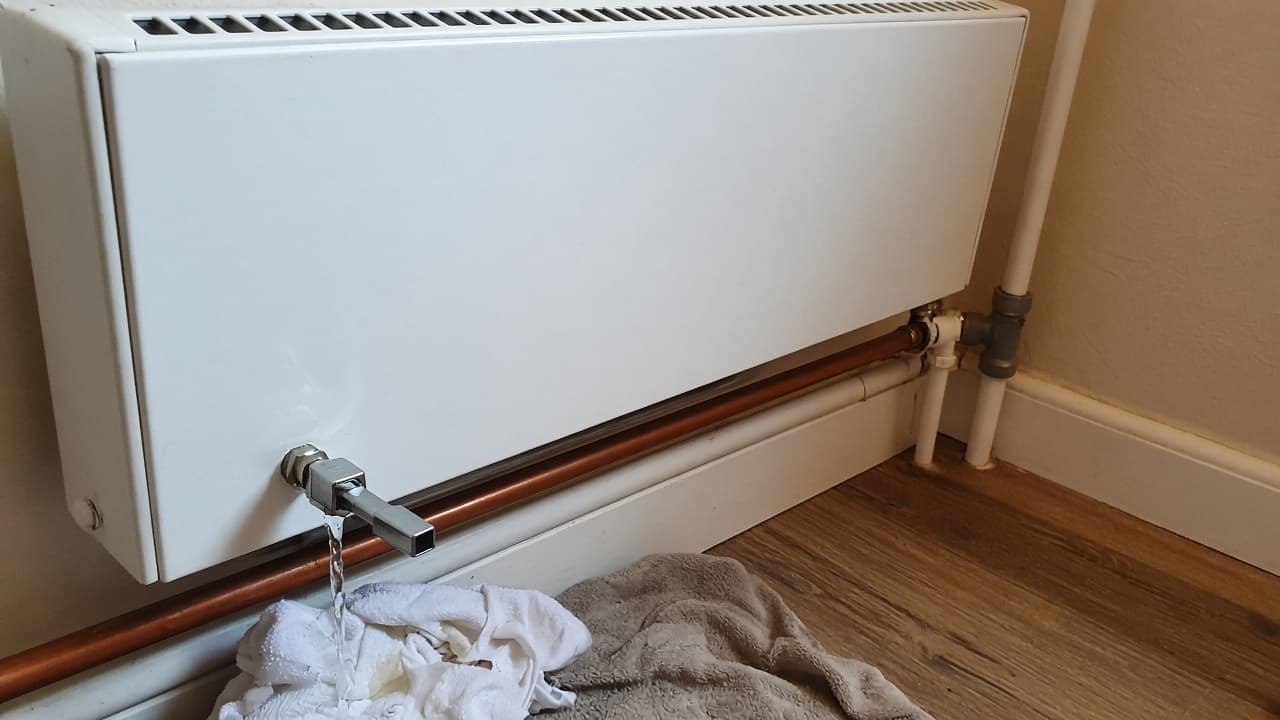
Tools
- Radiator bleed key
- Cloth or old towel
- Shallow bowl or mug
- Gloves (optional, water can be hot)
A radiator that is warm at the bottom and cold at the top usually has air sitting under the bleed valve. Bleeding lets that air out so water can fill the panel again. It is a short job with a square bleed key, a cloth, and a bit of patience. It is not a fix for a silent boiler, a leak on the gas side, or a valve that will not open.
If the radiator stays cold after a proper bleed, the next checks are often sticky valves or balance settings. See how to fix a cold radiator, then how to replace a TRV or how to replace a lockshield valve if the valve itself is the fault.
Is it air, or something else?
| Symptom | Likely cause | First move |
|---|---|---|
| Top cold, bottom warm | Air in that radiator | Bleed |
| Whole radiator cold, others hot | Valve shut, stuck TRV pin, or balance issue | Check TRV/lockshield path (see links above) |
| Several radiators cold, boiler unhappy | System or boiler fault | Do not dismantle the boiler; Gas Safe if gas appliance faults |
| Gurgling after recent work | Air still moving round | Bleed the cool tops, then recheck pressure on a combi |
Bleed when the heating has been off long enough that you will not scald yourself on a sudden spit of water, or work carefully with gloves and keep your face clear of the valve. Hot sludge-coloured water under pressure is messy and can stain walls and carpets.
What you will need
| Item | Notes |
|---|---|
| Bleed key | Square pin; DIY stores sell them cheaply. Some towel rails use a different key. |
| Cloth | Hold under the valve; water always arrives eventually |
| Bowl | Catches drips on polished floors |
| Paper and pen | Optional note of boiler pressure before and after (combi) |
You do not need to drain the system for a normal bleed.
Step-by-step
1. Turn the heating off and let panels cool a little
Switch the heating off at the programmer or thermostat. Give hot radiators a few minutes so the first discharge is less fierce. On a combi, glance at the pressure gauge now and note the reading (often around 1 to 1.5 bar when cold, depending on the boiler instructions).
2. Find the bleed valve
It is usually a small square spindle at one top corner of the radiator, sometimes under a plastic dust cap you pull off. Put the cloth underneath and the bowl ready. Carpet pile loves a brown drip you only notice later.
3. Open the valve slowly
Fit the key and turn anti-clockwise a fraction (often about a quarter turn). You should hear air hissing. Hold the cloth ready. When the hiss becomes a spit of water, close the valve clockwise firmly but without wrecking the tip. Do not unscrew the valve body out of the radiator; you only turn the small bleed spindle.
4. Work round other cool tops if needed
If several radiators feel airy, bleed the upstairs ones first on many systems, then downstairs, because air rises. Close each valve as soon as water follows the air. Leaving a valve weeping “just a bit” stains skirtings and drops system pressure.
5. Check boiler pressure on a combi
Bleeding lets water out with the air. On a sealed combi system the gauge can drop. If pressure is below the boiler’s cold fill range, repressurise using the filling loop exactly as the boiler manual shows. If you cannot find the loop, the gauge will not rise, or pressure crashes again within hours, stop. Persistent pressure loss can be a leak or a boiler fault: that is plumber or Gas Safe territory for gas boilers, not more DIY valve twiddling.
Open-vented systems with a F&E tank in the loft behave differently; topping up is not the same as a combi filling loop. If you are unsure which you have, do not force a combi-style fill procedure.
6. Restart and feel the panel
Turn the heating back on. After a cycle, the top of a previously air-locked radiator should warm through. A stubborn cold top after a clean bleed points away from simple air: look next at TRV and lockshield condition in how to replace a TRV and how to replace a lockshield valve, or book a heating engineer if sludge or boiler faults are likely.
Common mistakes
- Opening the bleed spindle so far the key slips off and water jets across the room.
- Bleeding while the system is stone cold every time, then wondering why a combi pressure reading looks different from the handbook’s hot figures (use the manual’s cold range when filling).
- Ignoring a pressure drop after bleeding three big panels on a combi.
- Assuming every cold radiator is air when the TRV head is set to off or the pin is stuck.
- Touching gas pipe unions, burner covers, or sealed boiler internals when the real issue is ignition or a fault code.
When to call a pro (and Gas Safe)
Call a heating engineer if radiators stay cold after bleeding, if you need repeated weekly bleeds, or if water from the valve is thick black sludge and performance is poor across the house. Call a Gas Safe registered engineer for gas boiler fault codes, smells of gas, suspected CO issues, or any work on gas components. Homeowners should not open the gas side of a boiler to “see what is wrong” after a bleed fails to fix the heat.
Cluster links: how to fix a cold radiator, how to replace a TRV, how to replace a lockshield valve.
FAQ
Why is my radiator cold at the top?
Trapped air is the usual reason. Water sits low; air sits high under the bleed valve. Bleed until water follows the air, then close the valve. If the whole radiator is cold, check valves and balancing next rather than bleeding endlessly.
How often should I bleed radiators?
Bleed when you feel a cold top or hear obvious air noise. There is no fixed monthly ritual for a healthy system. Frequent air after bleeding suggests a fill issue, a leak, or another fault that needs proper diagnosis.
Do I need to repressurise the boiler after bleeding?
On many combi (sealed) systems, yes if the gauge has dropped below the cold operating range in the manual. Use the filling loop as directed. On open-vented systems, follow that system’s topping-up method instead. Boiler fault codes, gas smells, or a pressure gauge that will not hold need a Gas Safe engineer for gas appliances.
Can bleeding fix a radiator that is cold at the bottom only?
Usually not. Cold bottom with a hot top often points toward sludge or circulation problems, not a simple air pocket at the bleed valve. Get advice rather than draining the whole system on a guess.
7 comments