How to Lay Composite Decking
16 July 2026 Joe HartleyIntermediate1–3 days14 comments
Tools
- Tape measure and chalk line
- Spirit level
- Drill/driver
- Circular saw or mitre saw with fine blade
- Hidden clips or composite screws (system-matched)
- Spacing gauges or packers
- Rubber mallet
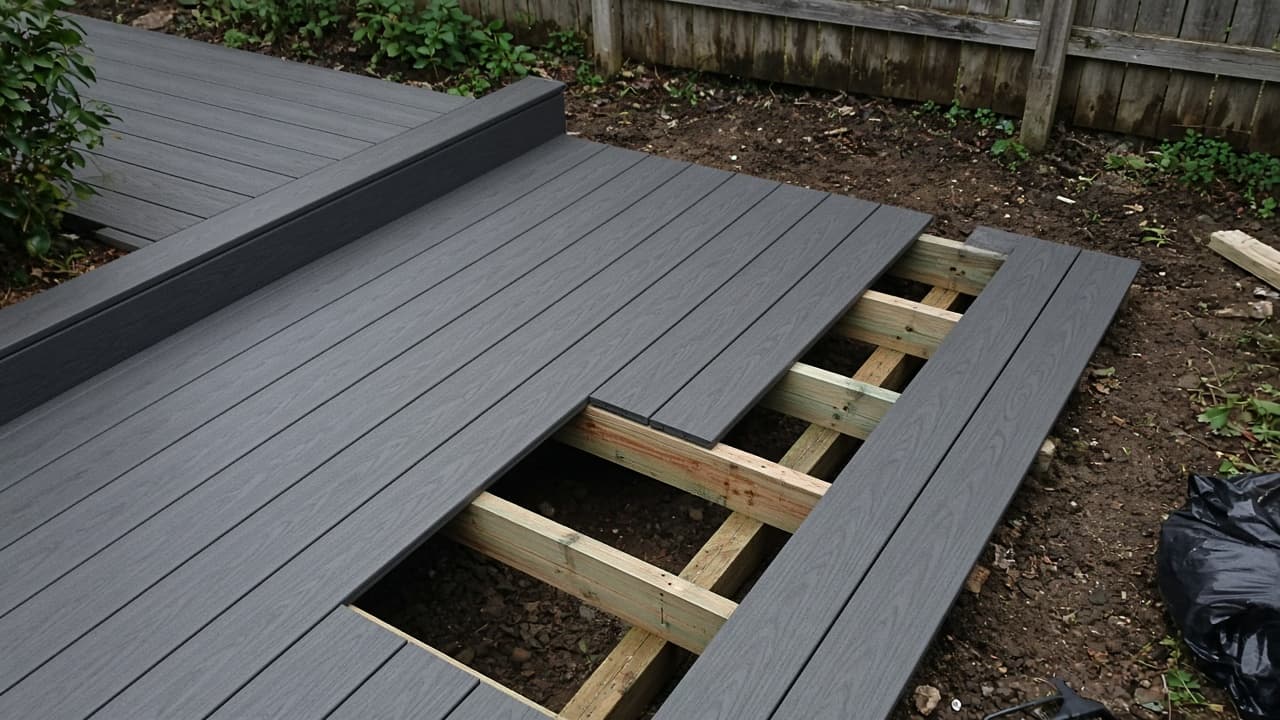
Composite boards are stiffer about rot than softwood, but they still move with heat and they punish a wavy frame. Lay them on joists at the centres the maker specifies, leave the expansion gaps they print on the box, and use their clips or screws. Mix systems and you own every squeak and popped fastener.
Build the structure first: how to build a decking frame. Prefer traditional boards instead? How to lay timber decking on joists. Composite usually needs cleaning more than oiling; timber care is covered in how to oil and maintain decking.
Hollow, solid, and clip systems
| Board type | How it fixes | Watch-outs |
|---|---|---|
| Hollow / grooved edge | Side clips into the groove, screw to joist | Clips set the gap; do not over-drive and pinch the board |
| Solid composite | Face screws or proprietary hidden fasteners | Pilot holes matter; cheap screws stain and snap |
| Capped composite | Same as above; wear layer on the show face | Cut ends may need end caps or colour-matched plugs |
Read the pack before you space joists. Many UK composite ranges want 300 mm or 400 mm centres, tighter at stair treads and board ends. If your frame was built at 400 mm for softwood and the composite pack says 300 mm, add joists. Do not “see how it feels”.
Store boards flat, out of intense midday sun on one face only, so they do not banana before you start. Acclimatise as the maker says (often a day or two on site).
Set out the first boards
1. Confirm the frame
Joists should be clean, level enough for the board system, and at the right centres. Fix any proud hanger nails. Sweep off grit; trapped stone under a hollow board clicks forever. Where boards will butt end-to-end, you need a joist (or doubled joist) under the joint, not a joint hanging in mid-air.
2. Snap a line for board one
Start against the house or the long visible edge. Leave the perimeter expansion gap the maker states (often around 5–10 mm to walls and posts). Composite pushed hard against brick will ridge when a hot afternoon expands the run.
3. Fix with the system fasteners
Hidden clips: screw the first starter clips, seat the board, and tap home with a rubber mallet and a sacrificial offcut so you do not bruise the cap. Face-fixed systems: pilot as instructed, drive screws perpendicular, and keep a straight line of fixings for looks. Do not mix random woodscrews from the shed; use exterior fasteners rated for composite.
4. Keep gaps honest
Use the pack’s spacer or the clip’s built-in gap between boards. UK rain needs somewhere to fall through. Butt joints in the length usually need a small end gap as well (often a few millimetres); check the chart for board length and temperature on the day you lay.
5. Stagger ends and trim the last run
Stagger end joints so they do not form a single seam across the deck. Rip the final board carefully if needed; hollow boards may need a support batten under a thin rip. Fit end caps, fascia, or colour-matched trims as supplied. Cut edges show the core; plan which elevation gets the neat factory edge.
6. First walk-round
Every board should sit quiet. Re-seat any clip that missed the joist. Clear swarf from grooves so the next season’s dirt does not block drainage paths in hollow sections.
Common mistakes
- Laying on joists spaced for softwood when the composite brand wants closer centres.
- Zero gap to the wall “so it looks tidy”, then heat-bowed boards in July.
- Face-screwing with zinc woodscrews that rust and leave dark tears on light grey boards.
- Ignoring butt-joint support so ends flex and the clip line creeps.
When to call a decking installer
Call in help for complex multi-level frames, stair flights with composite treads that need tighter centres, or when the maker’s warranty demands approved installers. If the existing softwood frame is rotten, rebuild or sister joists before you spend on composite; new boards will not straighten a failed structure.
Related: build a decking frame, lay timber decking on joists, fix squeaky decking boards, and oil and maintain decking for timber care (not composite).
FAQ
Do composite decking boards need oiling?
Usually no. Most composite is cleaned with mild detergent and a stiff brush, not decking oil. Oil can sit on the cap and go patchy. Follow the brand’s care sheet; timber oiling is a different job.
Which way up do composite boards go?
Grooved boards have a show face and a clip face; follow the pack. Some solid boards are reversible with different textures. Once you commit a run, keep the same face up so sheen matches.
How much expansion gap for composite decking UK?
Use the manufacturer’s table for your board length and the temperature when you fix. Perimeter gaps to walls are often in the 5–10 mm range; end gaps at butts are usually smaller but not zero. Hot spells and dark colours move more.
14 comments