How to Fix Squeaky Decking Boards
12 August 2026 Joe HartleyBeginner1–3 hours14 comments
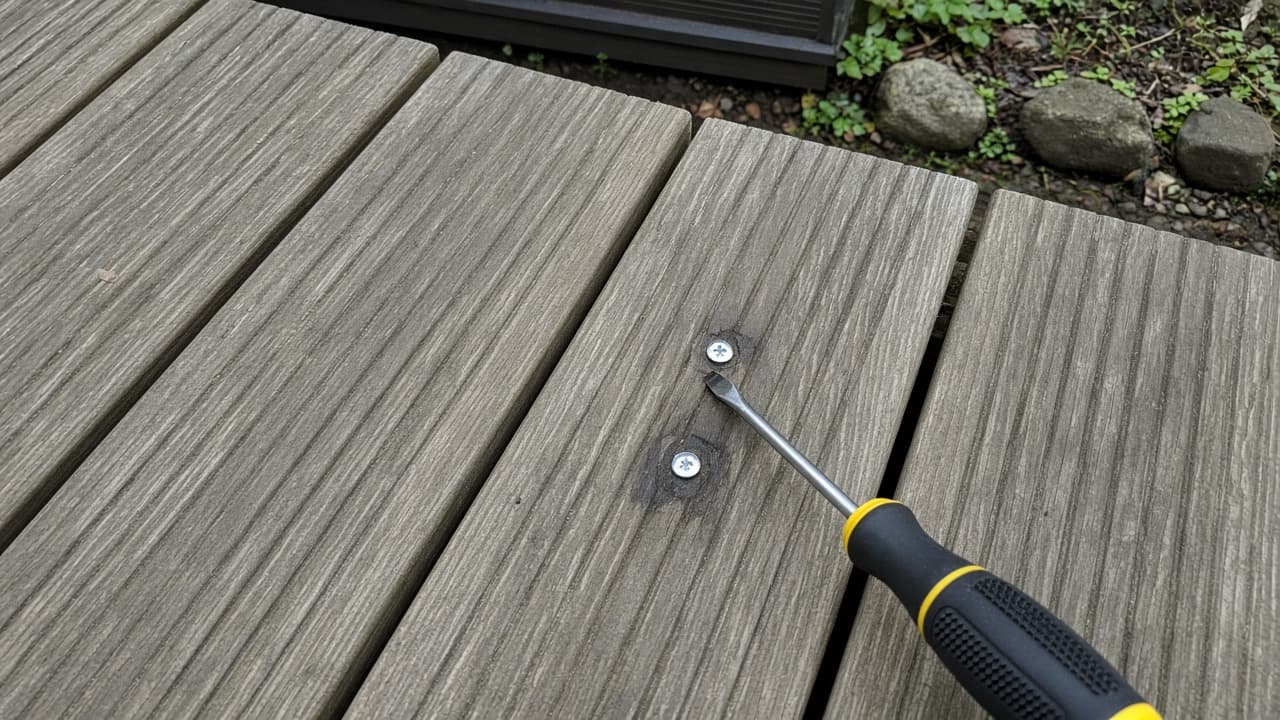
Tools
- Cordless drill / driver
- Decking screws (stainless or coated)
- Countersink bit
- Spirit level
- Tape measure
- Chisel or scraper
- Stiff brush
A squeak on decking is timber rubbing: board on joist, board on board, or a screw that has worked loose in soft, wet wood. Most UK softwood decks quieten with a few well-placed screws once you know which surface is moving. Soft joists, missing noggins, or a board that has cupped away from the frame need more than another fastener.
Where the noise is coming from
Walk the deck slowly and mark each squeak with chalk. Have someone stand on the board while you watch from the side or from underneath if the frame is open. A board that lifts at the edge usually needs new screws into the joist. A dull creak under a firm board often means the joist itself is moving against a post or bearer.
Composite boards rarely “squeak” like softwood. If a composite deck clicks, check clip spacing and hidden-fix seats rather than driving random screws through the face. Timber jobs: start with the board-to-joist joint.
Soft, dark, or crumbly timber under a screwdriver tip is rot. Stop the quietening job and inspect the frame before you hide the problem under more screws. Sistering or replacing a joist is a different task: build a decking frame.
Kit for a weekend fix
| Item | Notes |
|---|---|
| Decking screws | Outdoor grade, length that bites well into the joist (often 63–75 mm for 28–32 mm boards) |
| Drill / driver | Clutch set low so you do not crush soft pine |
| Countersink | Keeps heads flush; reduces trip snags |
| Spirit level | Checks if a “squeaky” bay is actually bouncing |
| Brush / scraper | Clears grit from gaps so boards can seat |
Take one old screw to the DIY store if you are matching a brand. Mixing thin zinc screws with older stainless can leave rust streaks on pale boards.
Step-by-step
1. Clear the area and dry the timber
Sweep grit out of the gaps. Work on a dry day if you can. Wet boards swell and can read as tight one day, then squeak again when they shrink. Wipe mud off the joist tops where you can reach them from the side.
2. Confirm the joist line
Existing screw or nail lines usually sit over the joists. On older DIY decks the grid may wander. Tap along the board: a solid note often sits over timber; a hollow note sits in the bay. Do not drive a long screw into empty space under the deck.
3. Pull the board down with new screws
Predrill if the board is dry and prone to splitting near the end. Countersink. Drive two screws through the board into the joist either side of the squeak, not one lonely screw in the middle of a wide board. Stop when the board is firm; crushing the face grain into a crater does not hold better.
If the board has cupped, screw both edges down onto the joist. Leave the design drainage gap between boards. Do not force boards tight edge to edge: that traps water and starts the next round of movement. Spacing guidance for new lays: lay timber decking on joists.
4. Check for rub between adjacent boards
Sometimes two boards rub at the long edge while both sit well on the joists. A light plane or rasp on the high spot, then a clean gap, beats screwing harder. Grit packed in a narrow gap acts like sandpaper every time someone walks past.
5. Walk-test and treat the timber
Walk the marked spots again. A new squeak one bay over is common once the first board is locked. Fix those next. Once quiet, clean and oil or stain as needed so the timber does not keep cycling wet and dry: how to oil and maintain decking.
Mistakes that leave the squeak (or split the board)
- Screwing into the bay between joists so the tip holds nothing.
- Using indoor chipboard screws that rust out in a season.
- Over-tightening softwood until the face splits along the grain.
- Ignoring a soft joist and “fixing” only the top board.
- Closing the gaps between boards so water sits on the joists.
When to call a carpenter or decking fitter
Call someone in if several joists feel soft, posts rock at the base, the whole bay bounces, or boards have cupped so badly they will not seat. Replacing a single board is often still DIY once the joist is sound. A frame that was never square or supported may need rebuilding: how to build a decking frame, then how to lay timber decking on joists.
Related: build a decking frame, lay timber decking on joists, lay composite decking, oil and maintain decking.
FAQ
Why do my decking boards squeak after rain?
Wet timber swells, then shrinks as it dries. Screws that were snug in winter can loosen in summer, and grit in the gaps grinds when boards move. Fix fasteners on a dry day and keep the surface clean.
Can I glue squeaky decking boards down?
Exterior wood adhesive can help a clean, dry board-to-joist face in a sheltered spot, but screws do the clamping outdoors. Glue alone fails when the deck stays damp. Prioritise mechanical fixing into sound joists.
Will oiling stop squeaky decking?
Oiling reduces moisture swing and can quiet minor seasonal rub, but it will not clamp a board that has lifted off the joist. Screw first, then maintain.
14 comments