How to Replace a Stair Spindle
28 June 2026 Joe HartleyIntermediate2–3 hours17 comments
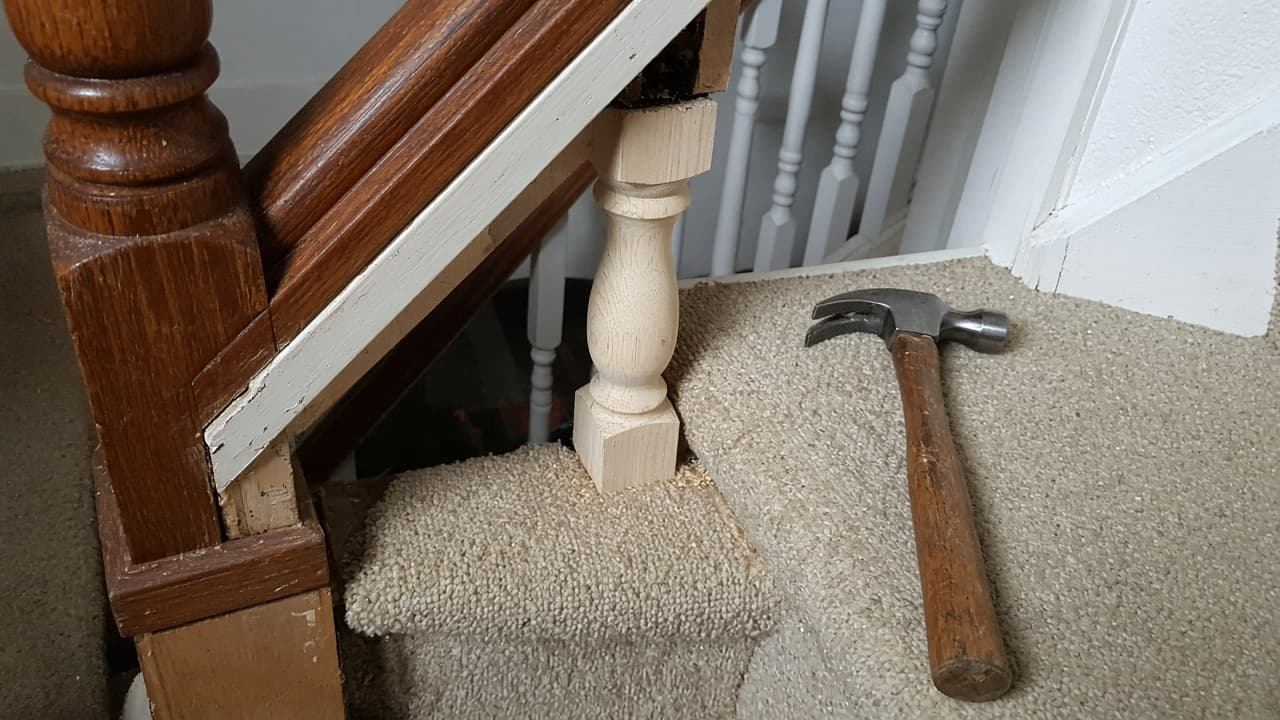
Tools
- Tape measure and combination square
- Coping saw or fine handsaw
- Chisel and mallet
- Wood glue and panel pins or screws
- Drill and countersink
- Sandpaper and filler
- Spirit level (short)
A broken stair spindle (baluster) is a common knock from furniture moves or a hard sideways load on the handrail. Replacing one matching turned or square spindle is a tidy intermediate job if the handrail and base rail (or tread housings) are sound. If the stringer is split, the newel posts rock, or several spindles have pulled out because the rail is loose, stop the cosmetic swap and sort the structure first.
Match the spindle before you cut anything
UK banisters vary: square pine, turned softwood, oak, and older hardwood profiles that no longer sit on the DIY-store shelf. Measure overall length, square section size, and the turned pattern. Photograph the damaged spindle against a tape measure and take both to a timber merchant or spindle supplier.
Check how it is held:
| Arrangement | What you will see | Removal hint |
|---|---|---|
| Fillet strip between spindles | Thin timber strips in the handrail and base rail grooves | Ease fillets out, then lift the spindle |
| Dowel or stub into tread and rail | Spindle ends into holes or housings | Cut the spindle mid-height, then remove stubs carefully |
| Screwed or pinned through the rail | Fixings from above or below | Undo fixings before prising |
Gap rules matter for safety. On domestic stairs, openings should not allow a 100 mm sphere to pass. Do not “borrow” space from neighbouring gaps to force a thicker replacement. Order the correct section.
Stop if the stringer is damaged. A spindle change should not involve packing or screwing into a cracked sloping string. Get a joiner in if the side timber moves or shows open splits.
Materials and prep
| Item | Notes |
|---|---|
| Replacement spindle | Same length and profile; buy one spare if the flight is old and fragile |
| Fillet / packing | Match thickness to the rail grooves |
| Exterior or interior wood glue | Match the room; wipe squeeze-out |
| Pins or screws | Fine pins into fillets; screws only where hidden and into sound timber |
| Finish | Stain, varnish, or paint to match neighbouring spindles |
Lay dust sheets. Protect carpet noses. If the flight still squeaks underfoot, quiet it before you lean hard on the rail: how to fix squeaky stairs.
Step-by-step
1. Support the handrail
Have a helper hold the handrail steady, or prop it lightly so removing one spindle does not twist the rail. On a long flight, one missing spindle temporarily weakens the run.
2. Free the fillets or cut the damaged spindle
Ease out the fillet strips either side with a thin chisel. Work from a painted joint carefully so you do not tear the rail. If the spindle is glued solid and will not lift, cut it in the middle and remove the two halves from the housings without levering against the stringer.
3. Clean the housings
Scrape old glue and splinters from the handrail and base rail (or tread) sockets. Dry-fit the new spindle. It should sit plumb with even gaps to its neighbours. Trim the length only if the supplier sent it long; take little off and re-check.
4. Glue and set the new spindle
Apply glue to the ends and into clean housings. Set the spindle plumb (short spirit level on a square face). Refit fillets snug against the spindle so the spacing stays honest. Pin fillets where that was the original method; avoid a forest of visible screws on show timber.
5. Check the rail and finish
Press sideways on the handrail near the repair. Movement should feel like the rest of the flight, not a soft spot at the new spindle. Fill pin holes, sand lightly, and finish to match. If the wall side needs a grab rail as well as the banister, that is a separate fix: how to fit a handrail to a wall.
Mistakes that leave a weak or ugly repair
- Forcing a near-match spindle and leaving a gap you could push a cricket ball through.
- Levering against a cracked stringer to pop the old stub out.
- Gluing over dust and old varnish so the joint fails in months.
- Painting only the new spindle a different sheen so it shouts from halfway up the flight.
- Ignoring a loose newel: one perfect spindle will not stiffen a rocking post.
When to call a joiner
Call a joiner if several spindles are loose, the handrail joints have opened, newels move, or the stringer shows damage. Full balustrade rebuilds and continuous rails on turns are beyond a single-spindle weekend. After the banister is sound, decide on covers or paint: carpet a staircase or decide to hire.
Cluster: fix squeaky stairs, fit a handrail to a wall, carpet a staircase or decide to hire.
FAQ
Can I replace one stair spindle without removing the handrail?
Yes on most fillet-and-groove banisters. Support the rail, remove the fillets beside the damaged spindle, and swap the piece. Only lift longer rail sections if housings will not free the stubs cleanly.
Where do I buy matching stair spindles in the UK?
DIY stores stock common pine sizes. Older turned profiles often need a specialist spindle supplier or a joiner to copy from a good neighbour spindle. Take measurements and clear photos.
How soon can I use the stairs after replacing a spindle?
Treat glued joints gently until the glue has cured to the maker’s time (often overnight). Walking the flight is fine; avoid leaning hard on that section of rail until the glue has set.
17 comments