How to Carpet a Staircase or Decide to Hire
17 August 2026 Joe HartleyBeginnerReading 10 minutes; DIY fit often 1–2 days18 comments
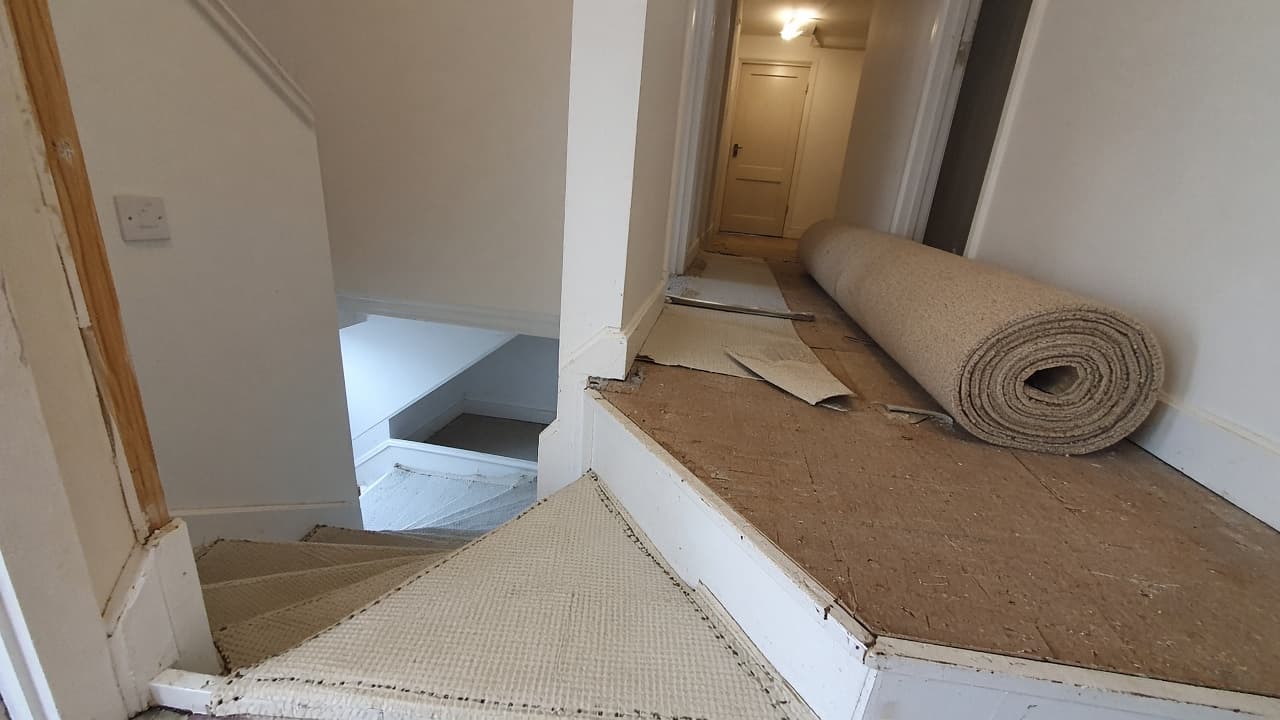
Tools
- Tape measure
- Notebook for quotes and pile direction
- Knee kicker and stair tool (if DIY)
- Staple or tack equipment rated for stairs
- Sharp knives and spare blades
- Gripper rods and underlay (if DIY)
Carpeting a staircase is where DIY confidence often meets a steep learning curve. A straight flight with a closed string can be done carefully over a weekend if you already understand gripper, underlay, and neat nosings. Winders, bullnoses, open strings, and patterned carpets punish mistakes in public. Use this page to choose DIY or hire honestly, then follow the matching path. Fix squeaks and loose spindles before you cover them.
DIY or hire: the honest split
| Situation | Lean toward |
|---|---|
| Straight flight, closed strings, plain carpet, tools hired or owned | DIY |
| You have fitted a room carpet successfully before | DIY (still go slow on stairs) |
| Winders, kite steps, or a curved bottom step | Fitter |
| Patterned or striped carpet that must align on every riser | Fitter |
| Open string with neatly wrapped spindles | Fitter unless you accept a long first attempt |
| Rental deadline or one chance before guests arrive | Fitter |
| Soft or damaged stringer, bouncing treads | Neither: repair first |
Stop if the stringer is damaged. Carpet will hide a split side for a few months, then the flight will still move. Get structure sorted, and quiet loose treads, before anyone stretches cloth over the problem: how to fix squeaky stairs.
Banister work is separate and often cheaper to finish while the carpet is up: how to replace a stair spindle, how to fit a handrail to a wall.
What a fitter quote should include
Ask for a written scope so quotes compare:
- Uplift and disposal of old carpet and underlay
- New gripper and underlay grade
- Carpet supply versus fitting only
- Nose finish (waterfall vs cap-and-band style, as agreed)
- Winders or bullnose priced as extras
- Doorway bars at top or bottom if needed
A cheap metreage rate that excludes winders is not cheap. Stair tool skill is most of what you pay for.
If you DIY: sequence that usually works
This is a decision-and-overview guide, not a full patterned-winder course. For a plain straight flight:
1. Make the timber sound
Screw and glue squeaks. Tighten loose spindles. Check handrail height and fixings if you rely on the wall rail. Do not stretch carpet over a bouncing tread.
2. Strip clean and fit gripper
Lift old carpet and underlay. Fix fresh gripper rods on treads and risers with the pins facing the right way for the stretch you will use, leaving the correct gap at the nosing for the carpet thickness. Miss this gap and the nose wears through early.
3. Underlay on the treads
Cut underlay to the tread only (common practice on stairs), tight to the gripper. Staple or stick as the product allows. Cheap thin underlay makes every screw head and squeak announce itself.
4. Cut and stretch one step at a time
Dry-measure with paper templates if you are unsure. Keep pile direction consistent down the flight (usually pile running down). Use a knee kicker and stair tool to seat the carpet into the gripper at the back of the tread and into the riser. Trim with a sharp blade; blunt knives chew edges.
Waterfall style (carpet continuing over the nose down the riser) is more forgiving for beginners than fancy caps. Still work one step fully before you cut the next length.
5. Finish edges and walk-test
Tuck neat edges against strings. Check every nose for ripple. Walk the flight in socks and shoes. A soft bulge at a nose will crease and fail.
If mid-job you hit winders you did not budget skill for, stop and phone a fitter rather than forcing a visible bodge on the half-landing.
Common mistakes
- Choosing DIY on winders or patterned carpet because the metreage looked cheap.
- Hiring a knee kicker and stair tool for one awkward flight, then still calling a fitter to redo the turns.
- Stretching carpet over squeaks or a soft stringer, then paying twice when you lift it again.
- Blunt blades and rushed nosings that fray within weeks.
- Ignoring pile direction so one step looks darker than the next in daylight.
When to hire (or call a joiner)
Hire a carpet fitter when the flight has turns, when the carpet is expensive, or when your time off work costs more than the labour line. Hire when open strings need clean mitres around spindles. Call a joiner first if the stringer is split, treads bounce, or newels rock: carpet will not stiffen a failing flight. A good fitter’s morning often beats two tense DIY weekends and a spare length you cannot return.
Related on this flight: how to fix squeaky stairs before you cover anything, how to replace a stair spindle and how to fit a handrail to a wall while the carpet is up.
FAQ
Is it hard to carpet stairs yourself?
A plain straight closed-string flight is achievable if you can stretch room carpet already and you work slowly with proper stair tools. Winders and patterns are hard. Be honest about which flight you have.
Should I fix squeaky stairs before carpeting?
Yes. Carpet and underlay soften sound slightly; they do not clamp a loose tread. Fix the timber first, then cover.
How long does a fitter take on a standard staircase?
Many straight domestic flights are a few hours for an experienced fitter once old coverings are up, longer with winders or tricky open strings. Ask for timing in the quote, including uplift.
When is DIY clearly the wrong call?
If you have kite steps, a bullnose, open strings you want wrapped cleanly, or a patterned carpet that must align on every riser, hire. One ruined expensive roll costs more than the labour you tried to save.
18 comments