How to Hang a Shelf
10 July 2026 Joe HartleyBeginner45–90 minutes8 comments
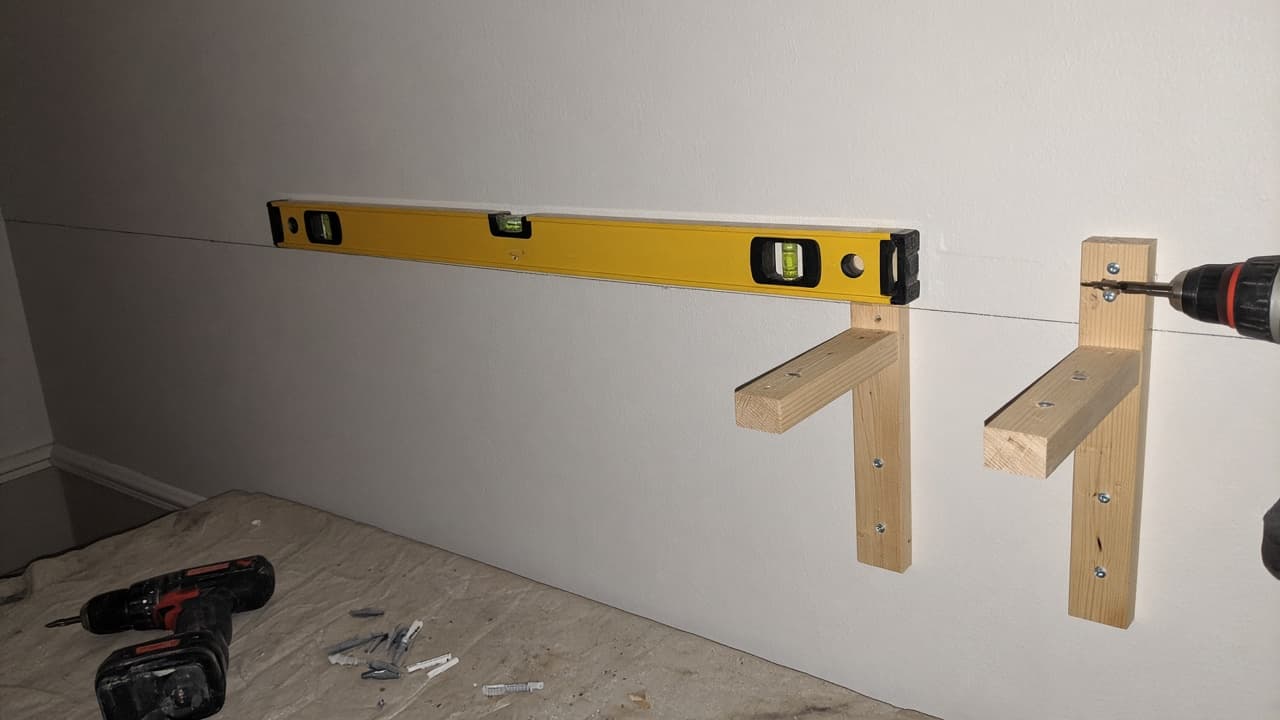
Tools
- Drill and bits (masonry and wood as needed)
- Spirit level
- Tape measure and pencil
- Stud detector or strong magnet (plasterboard)
- Screwdriver or driver bits
- Wall plugs or hollow-wall anchors matched to the load
A shelf fails in two boring ways: it is not level, or the fixings cannot hold what you put on it. UK walls are rarely one type, so pick the fixing for the wall you actually have, then mark carefully. The drill work is the short part.
For plasterboard detail (studs, noggins, rated cavity anchors), use how to put up shelves on plasterboard. Chimney alcoves have their own fitting quirks: how to fit alcove shelves. Building a freestanding unit instead of wall brackets: how to build a simple bookshelf.
Choose the wall and the fixing
Tap the wall and, if needed, drill a tiny pilot in a mark that will sit behind a bracket.
| Wall type | What to use | Avoid |
|---|---|---|
| Solid brick or block | Masonry bit, wall plugs sized to your screws | Soft plastic plugs meant for plasterboard |
| Plasterboard, light display load | Metal cavity anchors or spring toggles rated for the weight | Ordinary masonry plugs in hollow board |
| Plasterboard, books or heavy loads | Screws into timber studs or a batten fixed to studs | Hollow-wall plugs alone under a full row of hardbacks |
| Plasterboard over old masonry | Treat the outer board as hollow; check depth before long screws | Assuming every “solid” feel is brick all the way |
In many UK stud walls, centres are 400 mm or 600 mm. A magnet often sticks along screw lines in the plasterboard. Confirm with a fine pilot before you commit the bracket holes.
Heavy screens are not shelf loads. If you are mounting a TV, follow hang a TV on plasterboard or hang a TV on a brick wall instead of improvising with shelf brackets.
What you will need
| Item | Notes |
|---|---|
| Shelf and brackets (or floating rail kit) | Span within the maker’s load rating |
| Fixings matched to wall type | Plug diameter must match screw diameter |
| Spirit level | Long enough to span both brackets |
| Dust sheet | Masonry drilling throws grit onto skirting and floors |
On freshly plastered walls, wait until the plaster has cured. Soft new plaster will not grip plugs properly and you will chase loose brackets later.
Step-by-step
1. Decide height and mark a level line
Hold the shelf or a spare batten where you want it. Draw a light pencil line with a spirit level. Mark bracket positions from the centre outwards so the set looks balanced, not drifted toward one end of the board.
2. Locate timber or choose hollow-wall points
On plasterboard, find studs under the line. Shift brackets onto timber where you can. Where a bracket must sit between studs, plan a rated hollow-wall fixing for that hole only, or fix a timber batten into studs first and hang the brackets from the batten.
3. Drill and fit plugs or anchors
Keep the drill square to the wall. On masonry, use a masonry bit and blow dust from the holes so plugs seat fully. On studs, a wood bit and a pilot are enough; drive screws that bite well into the timber, not just the board skin.
4. Fix brackets or the floating rail
Screw brackets tight so they cannot spin. For floating shelves with a hidden rail, fix the rail dead level first; the shelf usually slides on and locks with grub screws on the underside. Check level again after the first screws, before you drive every fixing home.
5. Fit the shelf and load-test
Seat the board, tighten any locking screws, and add weight gradually. If anything creaks, pulls, or the brackets tip, unload and upgrade the fixings before you fill the shelf with books.
Mistakes that drop shelves
- Using masonry wall plugs in plasterboard. They spin in the void and pull out under the first heavy load.
- Buying plugs that are “close enough” to the screw diameter. Loose plugs work loose.
- Marking brackets by eye without a long level across both.
- Loading a floating shelf hard before the grub screws are snug on the rail.
- Ignoring cold external walls: leave a small gap behind a packed bookshelf so air can move and the wall can dry.
When to call a joiner or handyperson
Get help if you hit unknown pipes or cables, the wall is crumbling or blown, you need a spanning batten into awkward studs, or the shelf must carry a serious load (tools, aquariums, stacked hardbacks on a long span) and you cannot find solid fixing points. Structural alterations and notifiable electrics are outside this job.
FAQ
How do I know if my wall is plasterboard or masonry?
Knock it. A hollow, drum-like sound is usually plasterboard on studs. A hard, dull thud with brick dust from a pilot hole is masonry. Some rooms have plasterboard fixed over old brick: the first few millimetres feel soft, then the bit hits grit.
Can I hang a bookshelf on plasterboard alone?
Not safely on expanding plastic plugs. Hit studs, fix a batten into studs, or keep the load light with metal cavity anchors rated above the weight. For a freestanding option, build a simple bookshelf.
Why is my shelf level on the brackets but the board still looks wrong?
Boards can bow, and walls are rarely true. Check the board on the brackets with the level on the front edge. A thin packer behind one bracket end can correct a hollow wall without drilling new holes.
Do floating shelves need different fixings?
The rail still needs solid fixings into masonry or studs. The “float” is only how the board hides the rail. Undersized plugs behind a floating rail fail the same way as weak bracket fixings.
8 comments