How to Fit Alcove Shelves
12 July 2026 Joe HartleyIntermediate3–6 hours5 comments
Tools
- Tape measure, combination square, and pencil
- Spirit level and long straight edge
- Handsaw or jigsaw
- Scribing compass or washer and pencil
- Drill, plugs, and screws for wall type
Alcove shelves look simple until you notice the chimney breast is not square and the walls are out of plumb. Fit alcove shelves by fixing level bearers (or brackets) to the three walls, then cutting each board to the widest points and scribing the back and sides so gaps disappear against the plaster.
This is a fitted job. For a freestanding unit in the same recess, how to build a simple bookshelf can be quicker if you accept a gap at the sides.
Measure the recess properly
| Check | Why it matters |
|---|---|
| Width at the front | Often wider than the back against the breast |
| Width at the back | Board must clear the narrowest point if you slide it in whole |
| Depth left and right | Chimney breasts taper; one side can be 10–20 mm shallower |
| Plumb of side walls | A shelf that is square to one wall will gap on the other |
| Wall type | Plasterboard needs studs or hollow-wall anchors; masonry needs plugs |
Hold a long spirit level across the proposed shelf line on both side walls and the breast. Mark a continuous level datum. Do not trust the skirting or the ceiling as level references in an old terrace.
Materials for a clean fit
| Item | Notes |
|---|---|
| Shelf boards | 18 mm pine, oak-faced, or painted MDF; depth to suit the shallowest side |
| Timber bearers (battens) | 34 × 34 mm or similar, fixed to side walls and optionally the breast |
| Wall fixings | Match plasterboard or masonry; see shelves on plasterboard |
| Scribing tools | Compass, or a 10p coin and pencil run along the wall |
| Decorator's caulk (optional) | Tiny residual gaps after paint, not a substitute for a bad scribe |
Fitting method
1. Fix level bearers on both side walls
Cut bearers to the shelf depth (or slightly short of the front edge). Fix them to your level marks. On masonry, drill, plug, and screw. On plasterboard, hit studs where you can; the side walls of an alcove often have studs or solid returns. Both bearers must land on the same level line or the shelf will rock.
2. Add a rear bearer if the breast will take it
A bearer on the chimney breast stops the back edge dipping under books. Check for flues and keep screws modest in depth. If you are unsure what sits behind the plaster on the breast, skip the rear bearer and rely on strong side bearers plus a thicker board.
3. Template the first shelf
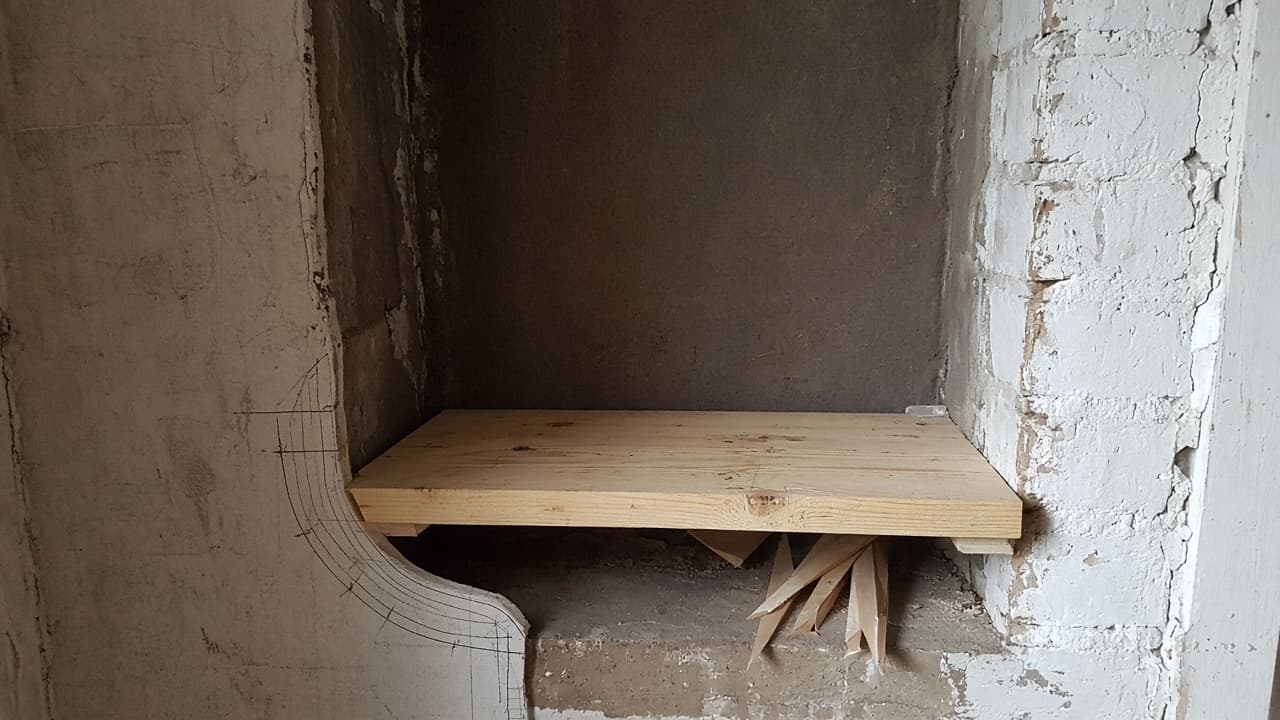
Cut a board slightly oversize on width and depth. Rest it on the bearers. The gaps against the breast and sides show you what to scribe. Set a compass (or coin offset) to the widest gap, then run the point along the wall while the pencil marks the board. Cut to the scribe line. Offer it up again; a second light scribe is normal on wavy lime plaster.
4. Repeat height by height
Use the first finished shelf as a pattern only if the walls are consistent. In most alcoves they are not. Remeasure width at each height. Chimney breasts often widen or narrow as you go up. Number the shelves so they go back in the same order after finishing.
5. Finish the front edge and load test
Plane or sand the front edge straight once the board sits tight at the back. Oil or paint. Load with books and check the bearers have not pulled. A hairline gap you can caulk is fine; a gap you can push a pencil into means another scribe pass.
Mistakes that leave ugly gaps
- Cutting every shelf to the front width and hoping the back will hide. It will not.
- Fixing bearers to different heights because one wall “looked” level.
- Scribing with the board pressed hard against a high spot so the pencil under-marks the hollows.
- Using short screws into plasterboard side walls with no timber behind. The bearer tears out when the shelf is loaded.
When to call a joiner
Stop if you want full height cupboards with doors, crown mouldings, or a run that must match existing joinery in the room. Open shelves on bearers are a solid DIY job; a freestanding unit in the same recess is often quicker (how to build a simple bookshelf). Also stop if drilling the breast feels unsafe around a live flue.
Cluster links: how to hang a shelf for general wall mounting, how to put up shelves on plasterboard when the side walls are hollow, and how to hang a TV on a brick wall if a screen sits on the breast above the shelves.
FAQ
How do I scribe alcove shelves to a chimney breast?
Rest an oversize board on the bearers, set a compass to the largest gap between board and wall, and trace along the breast and sides. Cut to the line, then ease high spots until the board sits snug without springing the walls.
Should alcove shelves sit on brackets or battens?
Side battens (bearers) are quieter visually and spread the load. Brackets work if you prefer an open look underneath, but you still need level fixing and a scribed board. For heavy books, battens into solid fixings are kinder.
Why is my alcove wider at the front than the back?
Many chimney breasts taper, and plaster builds up unevenly. Always measure front and back at each shelf height. Cut to clear the narrowest entry if you slide the board in, then scribe the visible edges tight.
5 comments