How to Stop Condensation in a North-Facing Bedroom
3 September 2026 Joe HartleyIntermediateOne weekend to reset the room; habits ongoing14 comments
Tools
- Hygrometer
- Microfibre cloths
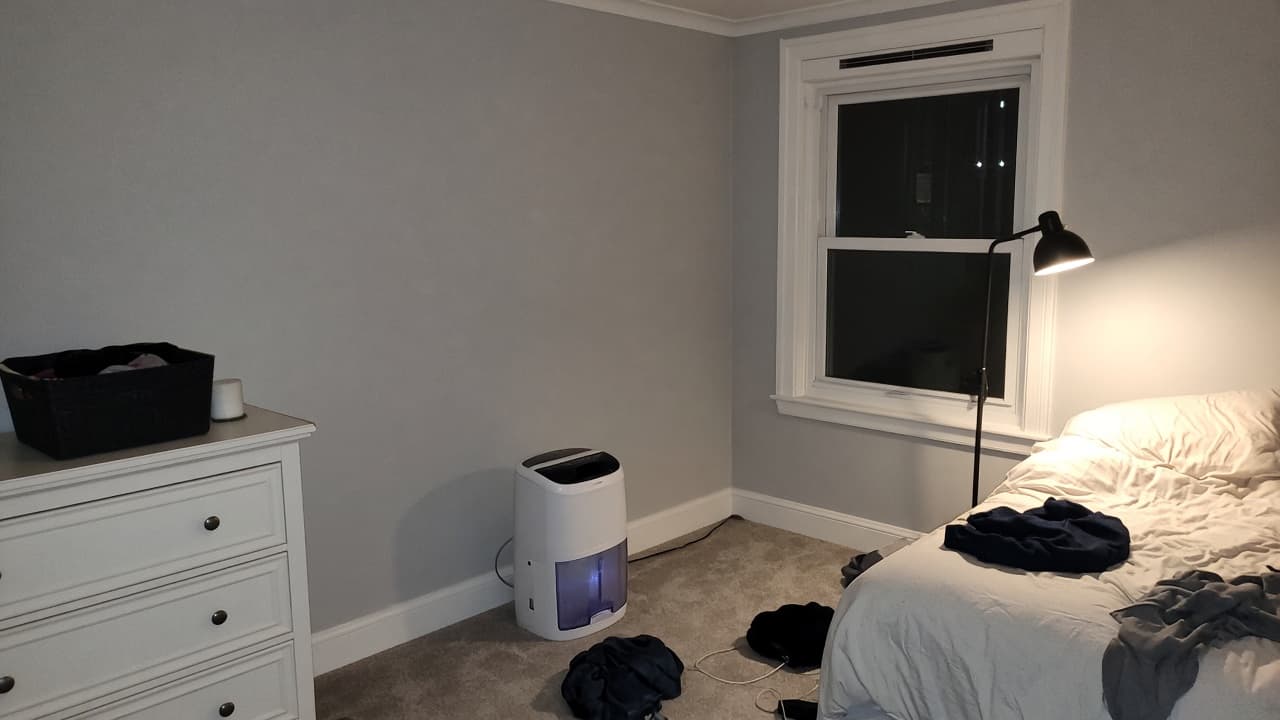
- Dehumidifier (optional but strong in bedrooms)
- Secondary glazing film kit (if needed)
- Tape measure (furniture clearances)
North-facing bedrooms stay cold. Little sun hits the glass, external walls never warm through, and overnight breathing plus shut doors load the air with moisture. By morning the panes run and the cold corners freckle with mould. This is a room-scale condensation job, not a single product fix.
Confirm it is condensation before you buy insulation kits. Low salty tide marks are a different problem: treat mould on walls safely. Victorian solid walls behave like cold radiators in reverse; cold corners and wardrobe shadows are the usual tell.
Why this room misbehaves
| Factor | What you notice |
|---|---|
| Orientation | Glass and reveals stay cold on clear winter days |
| Door shut all night | Moisture from breathing and en-suites cannot leave |
| Wardrobe on the external wall | Black bloom in a wardrobe-shaped shadow |
| Radiator off “because nobody is in by day” | Fabric and plaster never catch up before bedtime |
| Heavy curtains sealed to the sill | Cold pocket trapped on the pane overnight |
A cheap hygrometer on the bedside table tells you if the air is chronically wet or the surfaces are simply colder than the rest of the house. Both can be true.
Reset the bedroom in order
Work top to bottom. Skipping to film while laundry still dries on the radiator wastes the kit.
1. Map the wet nights
For a few mornings, note which surfaces are wet: glass only, reveals, external corner, behind furniture. Glass-only points hard at glazing and curtains. Corner and wardrobe blooms point at cold walls and trapped air. Use the general window playbook alongside this room plan: how to stop condensation on windows.
2. Change overnight moisture and airflow
- Keep trickle vents open on the bedroom windows.
- After showers, run the bathroom extractor and keep the bedroom door shut on the steamy bathroom, not the other way round.
- Avoid drying clothes in this room. If you must, shut the door, run a dehumidifier, and empty it before bed.
- A short purge vent when you wake (window open, door open to a drier hall) dumps the night’s humid air quickly.
3. Heat the room like a bedroom, not a storeroom
Low steady heat beats a blast at 10 pm on a freezing wall. Bleed and balance the radiator if the top is cold. Do not bury the radiator behind a bed base or thick curtains. Reflective panels behind a radiator on an external wall help a little; they do not replace background heat.
4. Break the cold pockets
Pull wardrobes and chests 50–100 mm off external walls so air can wash the plaster. That single gap cures more “mysterious” mould than another bottle of spray.
Leave a finger gap where thick curtains meet the sill so the pane is not sealed in a cold box all night.
5. Pull moisture from the air while you sleep
A dehumidifier on a gentle overnight setting in a closed bedroom often takes out a surprising volume of water. Empty it every morning; a full tank is an expensive ornament. Technique notes live in stop condensation on windows.
6. Warm the glass if it still runs
When habits are honest and the single glazing still sheets with water, add a seasonal air gap with how to fit secondary glazing film or consider panels. Do not tape film over the only trickle vent you rely on.
7. Clean existing mould the right way
Wash blooms with PPE and a proper cleaner, then dry, before any anti-mould paint. Method: how to treat mould on walls safely. Painting first locks spores under a fresh film that fails by February.
Optional upgrades (only after the reset)
| Upgrade | When it earns its keep |
|---|---|
| Secondary film or panels | Pane still icy after heat and vent changes |
| Better curtains / thermal lining | You need night insulation without sealing a cold pocket on the glass |
| Internal wall insulation | Specialist judgement on solid walls; dew point matters. Do not line cold walls on guesswork. |
| Heating and ventilation combined plan | Whole-house pattern, not one bedroom: stop condensation on windows |
Common mistakes
- Heating the living room generously and leaving the north bedroom on frost setting, then wondering why that room alone moulds.
- Sealing every vent and adding film while two people sleep in a small room with wet towels on the radiator.
- Pushing a full-height wardrobe flush to the cold wall “to maximise floor space”.
- Bleaching the corner every month and calling the problem solved.
- Buying thick thermal paint as a substitute for heat, venting, and a furniture gap.
When to call a pro
Call a damp or building professional if wet patches track from gutters, roof valleys, or ground level, or if mould covers large areas despite a genuine bedroom reset. Call a heating engineer if the radiator never gets hot or the system cannot hold a steady temperature. Renters should document the cold room and mould for the landlord; a north elevation is not an excuse for unmanaged condensation risk.
Same-cluster links: stop condensation on windows, treat mould on walls safely, draught-proof windows and doors, and fit secondary glazing film.
FAQ
Why is my north-facing bedroom worse than the south rooms?
Less solar gain keeps glass and external walls colder, so the same indoor humidity hits dew point sooner. The moisture source may be house-wide; the cold surfaces show it first in this room.
Should I leave the bedroom window on latch all night in winter?
A secure trickle vent or designed night vent is usually better than a wide latch in a storm. You need some fresh air, not a freezing draught that drives people to shut everything and trap moisture.
Will a bigger radiator fix it on its own?
More heat helps cold surfaces, but without ventilation and a break in cold pockets you can still get mould behind furniture. Heat plus airflow plus clearance works better than heat alone.
How long before mould stops coming back?
Give the reset a few cold weeks. If glass stays dry and corners stay clean through a frosty spell, you are on the right track. Recurring blooms mean a moisture source or cold bridge is still winning.
14 comments