How to Cut a Door to Size
2 July 2026 Joe HartleyIntermediate1–3 hours15 comments
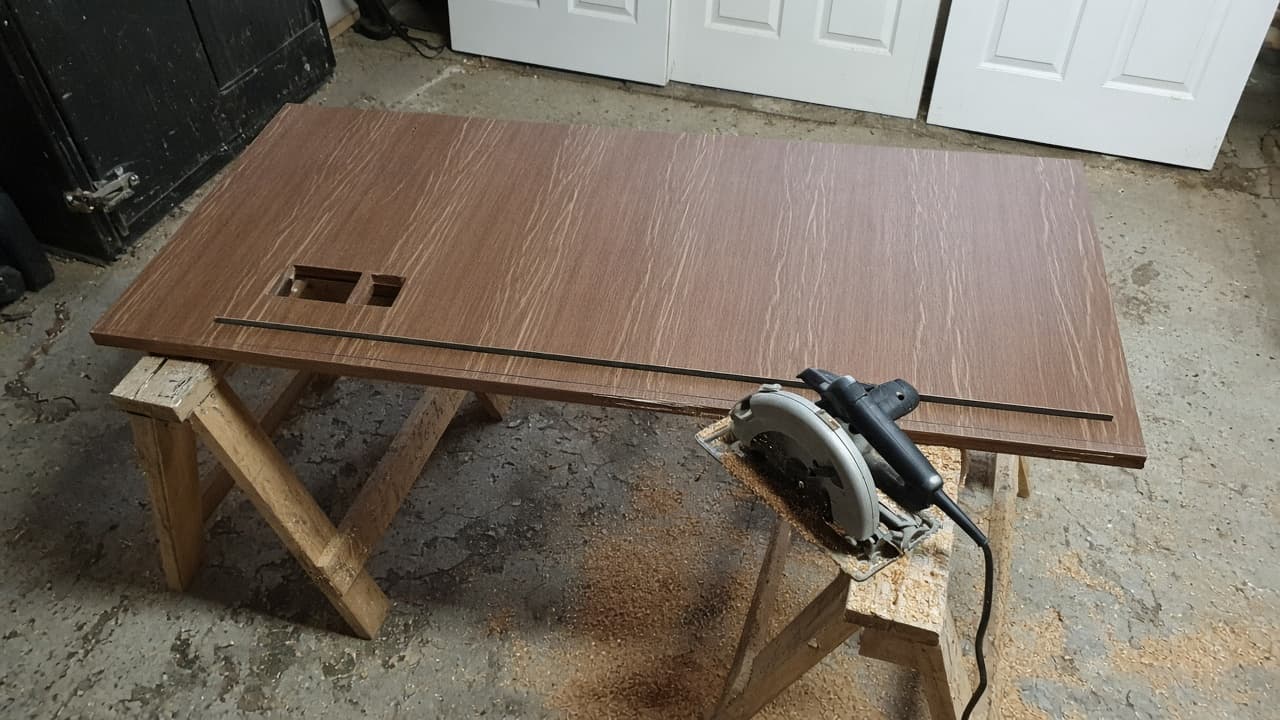
Tools
- Tape measure and pencil
- Straightedge or combination square
- Fine-tooth saw or circular saw with guide
- Block plane and sandpaper
- Door wedges or sawhorses
Cutting a door to size is controlled removal of lipping, not a hopeful saw cut across the face. Measure the opening at its tightest points, mark once, and leave enough solid timber at the edges so hinges and latch still bite.
If you are hanging as you go, pair this with how to hang an internal door or how to hang a new door in an old frame. Fine rubbing after a close cut belongs in how to plane a door that sticks.
Which edge to trim
| Need | Prefer |
|---|---|
| Reduce height | Bottom edge first (deeper bottom rail on many panel doors) |
| Reduce width | Latch stile, then hinge stile only if needed |
| Twisted old frame | Tapered cuts from a dry offer; see old-frame guide |
| Clear thick carpet | Bottom undercut, or rising butts instead of a deep cut |
Hollow-core doors often have only about 20–40 mm of solid lipping at the edges. Cut past that and you open honeycomb or foam. On veneered faces, score the cut line with a sharp knife on both faces before you saw, or the veneer will tear toward the waste.
What you will need
| Item | Notes |
|---|---|
| Door oversized for the opening | Easier than trying to stretch a short leaf |
| Fine saw / circular saw + guide | Coarse blades chip MDF and veneer |
| Plane | Clean the sawn edge and ease arrises |
| Sealer or primer | Bare edges, especially bathrooms, drink moisture |
| Masking tape | Optional; reduces veneer tear on the exit face |
Step-by-step
1. Measure the opening three ways
Width at top, mid, and bottom; height on both jambs. Use the smallest width and height. Subtract latch-edge and head clearances (often about 2–3 mm each side of the leaf when hung) and bottom clearance for finished floor (commonly 10–15 mm over hard floors, more for thick carpet). Write the finished door size on masking tape stuck to the face so you do not invert hinge and latch edges later.
2. Mark square lines on the leaf
Stand the door on edge or on sawhorses. Transfer height from the bottom if that is your trim edge. Use a straightedge across both faces so the cut does not wander. On panel doors, keep enough bottom rail; a skimpy rail looks wrong and weakens the leaf.
3. Score, then cut
Score the face veneer along the line. Cut with the good face up for a handsaw, or follow your circular saw’s tear-out advice (often good face down). Support the waste so it does not snap off and splinter the last few centimetres. Stop if you hit hollow honeycomb mid-cut; you have gone past the lipping and need a different door or a professional rebuild of the edge.
4. Plane and ease, then dry-fit
Plane the sawn edge true. Ease the arrises lightly so paint does not chip. Offer the door into the frame on wedges. Adjust with thin plane passes rather than another full saw cut. Hinge and latch work: how to fit door hinges correctly.
5. Seal every bare edge
Prime or seal the cut edge and any planed spots before hanging for good. Unsealed bottoms wick mop water and stick within a season, which is a common reason people later need how to fix a sticking door.
Mistakes that ruin a hollow-core leaf
- Taking more than the solid lipping allows and exposing honeycomb.
- Cutting height from the top when the top rail is thinner than the bottom.
- Measuring bottom clearance before the finished floor height is known.
- Leaving raw MDF or softwood on a bathroom or kitchen door.
When to call a joiner
Stop on fire doors (certified leaf sizes and seals), glazed doors where glass sits close to the cut, and leaves that need more than the lipping can give. Cost context for a full hang: cost to hang an internal door DIY vs joiner.
Same cluster: how to hang a door on existing hinges, how to fit an internal door, how to fit rising butt hinges.
FAQ
How do I measure a door before cutting it?
Measure the tightest opening width and height, subtract clearances, mark square lines, score veneers, cut within the solid lipping, plane true, dry-fit, then seal bare edges.
Can I cut both sides of a hollow-core door?
Yes, if each cut stays inside the solid edge lipping. Taking a large amount off both stiles often opens the core; buy a better-sized door instead.
Should I cut the door before or after fitting hinges?
Mark hinge positions after the leaf is to size, or you will shift recesses when you shorten or narrow the door. Exception: swapping onto existing jamb hinges, where positions are already fixed (how to hang a door on existing hinges).
15 comments